
Beachside Dental Group
18800 Main St Ste 110Huntington Beach, CA 92648
Four named practices — one group. Each office has its own phone line.
Children & Family
Dental care for kids from the first tooth on: gentle first visits, cleanings, fluoride, sealants, and prevention habits — paced to each child's comfort at all four offices.
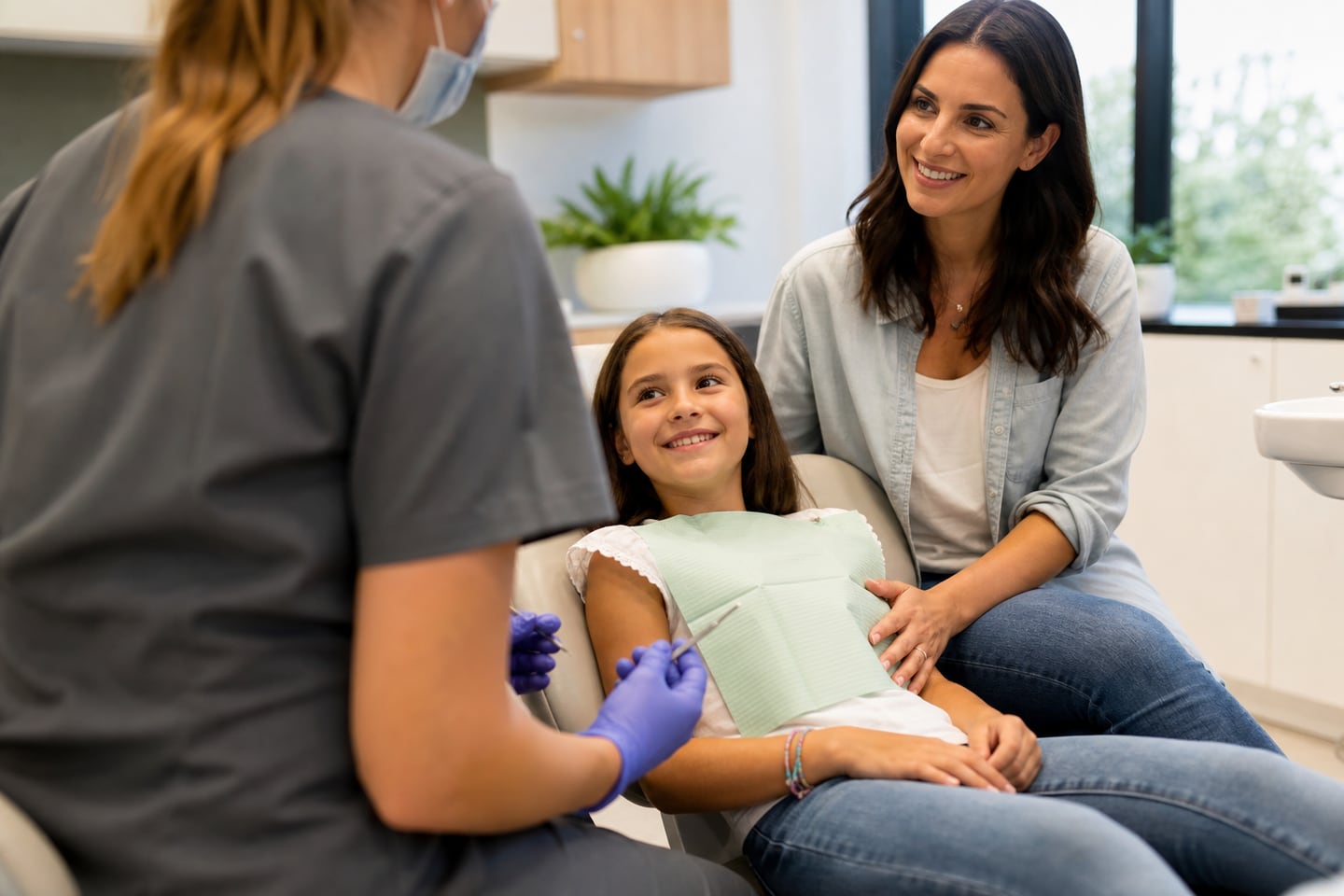
Pediatric dentistry is dental care built around how children actually behave — short visits, plain words, and no surprises. The goals are simple: healthy baby teeth, cavities prevented, and a child who does not fear the dentist.
A common clinical guideline is a first dental visit around the first birthday, or within six months of the first tooth appearing. Early visits are short and mostly educational — a gentle look, a count of teeth, and practical coaching for parents on brushing, bottles, and snacks.
Baby teeth matter more than their lifespan suggests: they hold space for adult teeth, and decay in them is real decay — it hurts, spreads, and can damage the adult tooth developing underneath. Pediatric care is available at all four offices, and it pairs naturally with family dentistry so parents can be seen at the same practice.

Candidacy
Pediatric dentistry fits children from the first tooth through the teen years — including nervous kids, kids who had a rough dental experience elsewhere, and teens transitioning toward adult care.
It has honest limits. Children with significant medical complexity, very extensive decay at a very young age, or behavioral needs that call for hospital-setting care are better served by a dedicated pediatric specialist — and referring those cases out is part of doing this well.
Benefits
Early, low-pressure visits teach kids that the dentist is routine, not scary. That comfort is the most durable thing we build, and it pays off for decades.
Fluoride strengthens young enamel, and sealants protect the deep grooves of new molars — the places where children's cavities most often start.
Parents get specific, doable guidance: brushing technique by age, what juice and sticky snacks actually do to teeth, thumb and pacifier timelines.
Seeing a child regularly lets the dentist track erupting teeth, spacing, and bite early enough that orthodontic timing decisions are informed, not rushed.
Care is explained to you and your child in plain language. Nothing happens in a child's mouth that has not been explained first.
The process
For toddlers: a lap exam, a count of teeth, a look at gums and bite, and coaching for parents. Short by design.
often under 30 minutes
Older kids get a gentle cleaning and fluoride, with X-rays only when age and risk call for them.
Permanent molars typically erupt around ages six and twelve; sealing their grooves soon after eruption is prevention at exactly the right moment.
If a cavity needs filling, we use tell-show-do, numbing that starts with topical gel, and breaks when a child needs one. Some visits accomplish less so the next one goes better — that trade is deliberate.
varies by the child
Recovery & risks
Preventive visits involve no recovery — kids can eat and play normally right after. Fluoride varnish may come with a short list of foods to skip for a few hours; the team will tell you.
After a filling or extraction, the biggest job is supervising the numbness: children bite and chew numb lips without feeling it. Expect specific instructions and a soft-food window, and call the office about anything that seems off.
Pediatric preventive care is very low-risk. The honest risks sit elsewhere: untreated decay in baby teeth progresses quickly and can cause pain, infection, and harm to the developing adult teeth — waiting for a baby tooth to "fall out on its own" is often the costliest plan. Sedation for dentistry, when a case calls for it, carries its own risks and deserves a careful, unhurried conversation about options and settings.
Outcomes vary by child. Cavity risk is a mix of enamel, diet, hygiene, and habits — some children do everything right and still form cavities, and the plan adjusts rather than blames.
Where to go
FAQ
A common clinical guideline is around the first birthday, or within six months of the first tooth appearing — earlier than many parents expect. The first visit is short and mostly preventive: a gentle look at teeth and gums, and practical coaching on brushing, bottles, and snacking. Starting early builds comfort before there is ever anything to fix.
Very little, on purpose. A lap or knee-to-knee exam with a parent holding the child, a count of teeth, a look at gums and bite, maybe a smear of fluoride varnish — and most of the time is coaching for you: brushing technique, bottle and sippy-cup habits, what snacks do to teeth. Crying is normal at this age and does not mean the visit failed.
Slowly, and on the child's terms. Tell-show-do (explain the tool, show it, then use it), plus plain words, breaks, and a parent nearby. Sometimes a first visit is just a ride in the chair and a sticker, and the real work happens next time; that trade is deliberate. For severe anxiety or extensive treatment needs, sedation options or a referral to a dedicated pediatric specialist are discussed openly rather than forced through.
Usually, yes. Baby molars stay in the mouth for years, hold space for adult teeth, and decay in them spreads faster than in adult teeth — it can cause pain, infection, and damage to the adult tooth developing underneath. Occasionally, a small cavity in a tooth close to falling out is reasonably monitored instead of filled. The dentist should tell you which situation yours is, and why.
Four things carry most of the weight: brushing twice daily with a fluoride toothpaste (with help until the child has the dexterity to do it well), limiting how often sugary drinks and sticky snacks appear (frequency matters more than amount), sealants on new permanent molars, and regular checkups so small problems stay small. None of it is exotic; consistency is the hard part.
Keep exploring
One dental home for every age (kids' first visits, teens, parents, grandparents) across four Southern…
A routine visit pairs a professional cleaning with a full exam: plaque and tartar removed, gums measured…
General dentistry is the ongoing care that keeps teeth working: exams, cleanings, X-rays when needed, and…
Request an appointment and talk it through — nothing is scheduled until you understand and agree.