
Beachside Dental Group
18800 Main St Ste 110Huntington Beach, CA 92648
Four named practices — one group. Each office has its own phone line.
Gum Care
Gum disease treatment ranges from a thorough cleaning to scaling and root planing with ongoing maintenance. Gingivitis can be reversed; periodontitis can be managed for life — honestly, not cured.
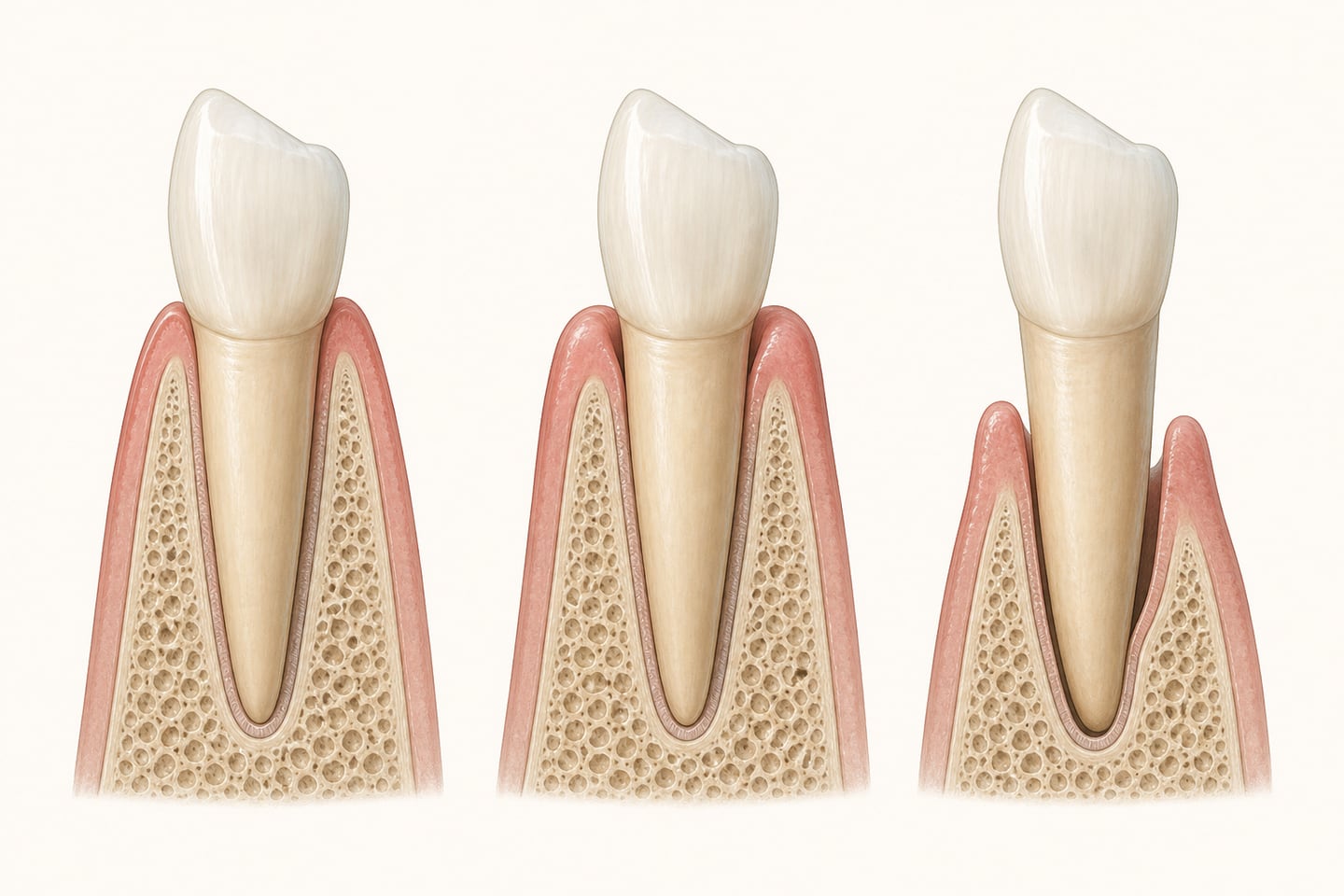
Gum disease is an infection and inflammation of the tissues that hold your teeth. Treatment depends entirely on stage. Gingivitis (inflammation without bone loss) is reversible with professional cleaning and better home care. Periodontitis (where the bone supporting the teeth has begun to erode) can be halted and managed, but not cured.
That distinction is the most important sentence on this page. If you have periodontitis, the goal of treatment is to stop the losses and keep your teeth for decades — a maintenance relationship, not a one-time fix. Any promise of a cure is a red flag.
Warning signs worth acting on: gums that bleed when you brush or floss, persistent bad breath, gums pulling away from teeth, teeth that look longer, new gaps, or looseness. Gum disease usually does not hurt until it is advanced — bleeding is typically the earliest honest signal.
Gum disease treatment is listed at Beachside Dental Group, Marina Dentistry, and Rio Hondo Dental Group. It starts, always, with measurement.

Candidacy
Anyone with bleeding gums, measured pocket deepening, or diagnosed periodontitis is a candidate for gum therapy — including patients who had scaling years ago and drifted off maintenance.
It is not always the first move. Patients with healthy measurements need routine cleanings, not deep ones — and should decline a deep cleaning that comes without measurements to justify it. Advanced cases with severe bone loss may need referral to a periodontist for surgical options; honest management includes saying when non-surgical therapy has reached its limit.
Benefits
Gum pockets are measured tooth by tooth and compared with X-rays. You see the numbers that justify the recommendation — or the numbers that say you only need a routine cleaning.
Caught before bone loss, gum disease is one of the few dental problems that can be truly undone — a thorough cleaning plus consistent home care restores healthy gums.
Scaling and root planing cleans the root surfaces below the gumline where brushing cannot reach, removing the deposits that drive bone loss.
Periodontal maintenance visits, commonly every three to four months, keep bacterial levels low enough that the disease stays quiet.
The point of all of it: managed gum disease means keeping your natural teeth. Untreated periodontitis is one of the most common causes of adult tooth loss.
The process
Measurements around every tooth, bleeding points, looseness, and X-rays. This map, not a sales pitch, decides between routine cleaning, deep cleaning, or referral.
With the area numbed, deposits are removed from the root surfaces below the gumline, usually one section of the mouth per visit.
often split across two or more visits
Gums are re-measured after healing. Shallower, non-bleeding pockets confirm the response; stubborn sites get targeted follow-up or a periodontist referral.
a few weeks after treatment
Ongoing cleanings at shorter intervals, commonly every three to four months, replace the standard six-month schedule, indefinitely. This step is what "managed, not cured" means in practice.
Recovery & risks
After scaling and root planing, expect tender gums for a few days, some cold sensitivity, and minor bleeding when brushing the treated areas at first. Over-the-counter pain relief, salt-water rinses, and gentle-but-thorough brushing are the standard playbook; the office will give specifics.
As swollen gums heal and tighten, teeth can look slightly longer and gaps more visible. That is the inflammation resolving — the honest cost of treating disease that had already destroyed some support.
The treatment's own risks are modest: temporary sensitivity, gum recession as inflammation resolves, and soreness. The larger risks belong to the disease. Periodontitis that goes untreated, or treated once and never maintained, typically continues to destroy bone silently. Skipping maintenance visits is the single most common way treated patients lose ground.
Results vary meaningfully. Smoking, diabetes, genetics, and home care all shape how gums respond, and no clinician can promise a specific outcome. What can be promised: measurements before recommendations, honest staging, and referral to a periodontist when a case needs one.
Where to go
FAQ
It depends on the stage, and the honest answer has two halves. Gingivitis (inflammation without bone loss) — yes: professional cleaning and consistent home care can fully reverse it. Periodontitis (where supporting bone has been lost) — no: it can be halted and managed for life with treatment and regular maintenance, but the lost bone does not grow back on its own. Be wary of anyone promising a cure for periodontitis.
The areas being treated are numbed first, so during the visit you should feel pressure and scraping rather than sharp pain. Afterward, expect tender gums for a few days and some cold sensitivity for a while as exposed root surfaces settle — over-the-counter pain relief and salt-water rinses handle it for most people. If pain is more than mild or is getting worse, call the office.
Common signs: gums that bleed when brushing or flossing, persistent bad breath, red or puffy gums, gums pulling away from teeth, teeth looking longer, new gaps, or looseness. The catch is that gum disease usually does not hurt until it is advanced — so the reliable answer comes from an exam with gum measurements and X-rays, not from waiting for symptoms.
Because after periodontitis, the bacteria repopulate treated pockets within months, and deeper pockets are harder for home care to keep clean. Shorter intervals interrupt that cycle before it re-damages bone. Periodontal maintenance is the treatment, ongoing — patients who drift back to twice-a-year cleanings after gum therapy are the ones who most often lose ground.
Common, yes; normal, no. Healthy gums do not bleed from routine brushing and flossing — bleeding is usually the earliest sign of gum inflammation. If you have just restarted flossing, a week or two of consistent, gentle cleaning often calms it. Bleeding that persists beyond that deserves an exam with gum measurements; caught at the gingivitis stage, it is fully reversible.
Keep exploring
A routine visit pairs a professional cleaning with a full exam: plaque and tartar removed, gums measured…
General dentistry is the ongoing care that keeps teeth working: exams, cleanings, X-rays when needed, and…
A cleaning that goes below the gumline and smooths the root surface underneath. Why it takes more than one…
Gingivitis reverses completely. Periodontitis does not, because destroyed bone does not rebuild itself. What…
Gingivitis is inflammation of the gum and it reverses. Periodontitis means the bone holding the tooth has…
Bleeding means plaque has inflamed the gumline. Brushing harder and quitting flossing are the two responses…
Request an appointment and talk it through — nothing is scheduled until you understand and agree.