
Beachside Dental Group
18800 Main St Ste 110Huntington Beach, CA 92648
Four named practices — one group. Each office has its own phone line.
General & Preventive
A filling repairs a cavity or small break with tooth-colored composite, restoring the tooth in one visit. Caught early, it is one of dentistry's smallest and most effective repairs.

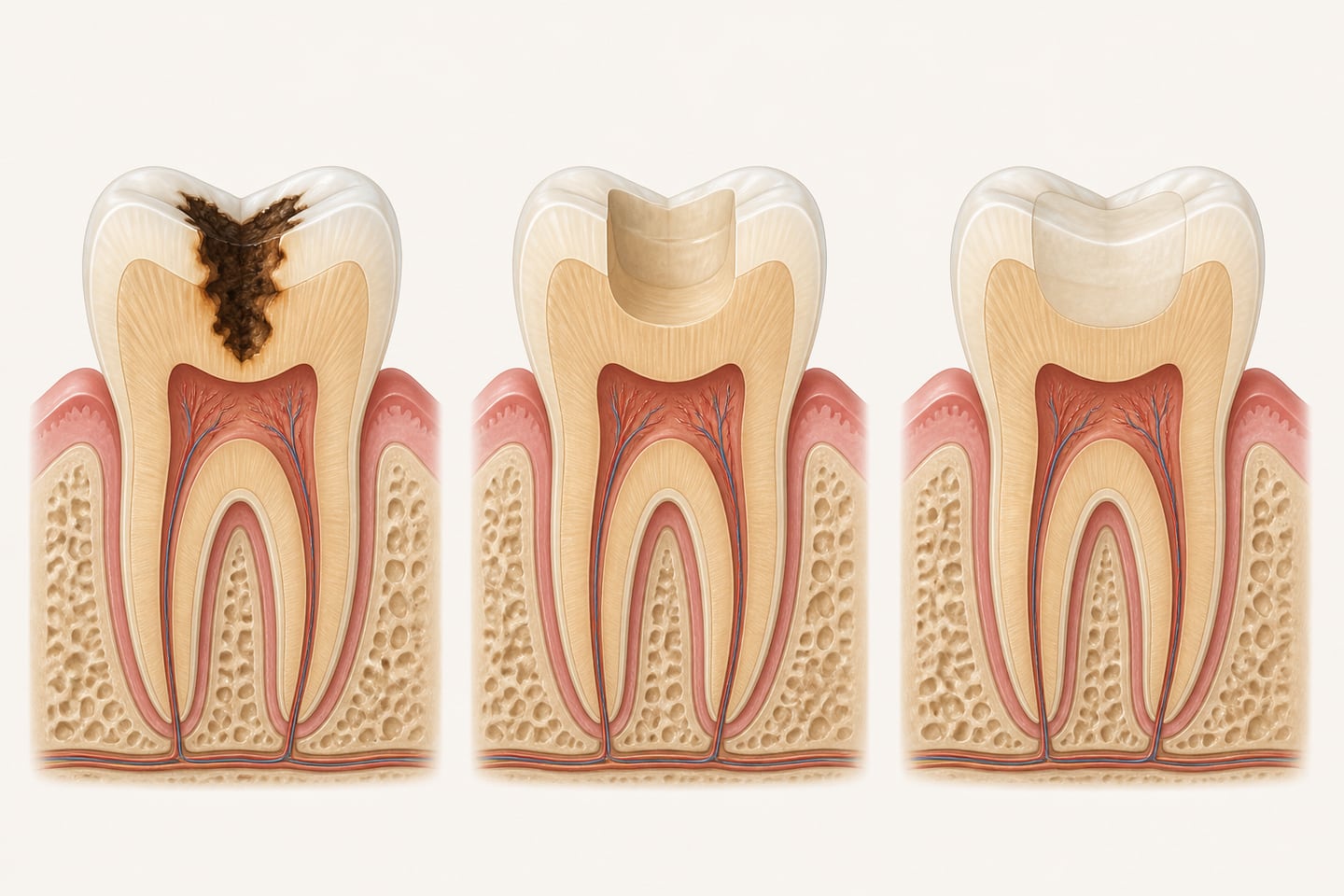
A filling repairs a tooth after decay or a small fracture. The dentist removes the damaged part, cleans the area, and rebuilds the tooth with composite resin — a tooth-colored material bonded in place and shaped to your bite. Most fillings are finished in a single visit.
Fillings are for small-to-medium damage caught reasonably early. That timing matters: decay does not heal or pause on its own, and a cavity that needs a simple filling this year can need a crown or root canal later.
Tooth-colored composite is the standard material here. It bonds to the tooth, usually requires less drilling than older silver amalgam, and blends in visually. Beachside Dental Group and Rio Hondo Dental Group list fillings among their published services; if a different office is closer, book a general exam there first — diagnosis comes before any repair, and the team will route you.
The deciding factor is how much healthy tooth remains. A filling patches a tooth that is still mostly intact. When decay or fracture has consumed a large share of the tooth (or the tooth is cracked, or already heavily filled), a crown protects better by covering the whole tooth.
If a crown is the better repair for you, see dental crowns for how that works.

Benefits
Removing decay and sealing the tooth halts a process that will not stop on its own. Early fillings preserve the most natural tooth structure.
Most single fillings are placed, shaped, and polished in one appointment, with the tooth numb throughout and normal eating a few hours later.
Composite is matched to your tooth's shade. On front teeth it can repair chips discreetly; on back teeth it avoids the dark look of old metal.
Because composite bonds to enamel, the dentist removes the decay and little more, keeping the repair as small as the damage allows.
Composite can often be patched or replaced in sections as it wears — maintenance over the years rather than starting over.
Candidacy
You are a candidate for a filling if the damage is small enough that most of the tooth remains sound — which covers the majority of cavities caught at routine exams.
A filling is not the fix when decay reaches the nerve (which points to root canal therapy), when too little tooth remains (a crown), or when a tooth is cracked through. Deep cavities sit in a gray zone: the dentist may place a filling knowing there is a chance the nerve is already too involved — and should tell you that upfront.
The process
The area is numbed with local anesthetic. You will feel pressure and vibration during the procedure but should not feel sharp pain — say so immediately if you do.
The dentist removes the decayed portion and shapes a clean surface for bonding. This step confirms whether a filling is still the right repair.
Composite goes in thin layers, each hardened with a curing light, then is carved to match your tooth's anatomy.
about an hour for most fillings
You bite on marking paper so the filling can be adjusted until it feels like your own tooth, then it is polished smooth.
Recovery & risks
Fillings need almost no recovery. Numbness wears off in a few hours — avoid chewing on that side until it does. Mild cold sensitivity for a few days to a few weeks is common, particularly with deeper fillings, and should trend better, not worse.
If your bite feels high once the numbness fades, call for a quick adjustment. A high filling can make a tooth ache, and the fix takes minutes.
Fillings are routine, but not risk-free and not forever. Composite wears and can chip or stain over the years; every filling will eventually need maintenance or replacement, and how long yours lasts depends on its size, its location, your bite, and your hygiene — no honest single lifespan fits everyone.
Deep fillings carry a specific, real risk: if decay approached the nerve, the tooth may ache afterward and ultimately need root canal therapy. That is not a failed filling; it is the decay's depth declaring itself — but you should hear the possibility before treatment, not after. Persistent throbbing, heat sensitivity, or pain when releasing a bite warrant a prompt call.
Where to go
FAQ
The tooth is numbed first, so during the procedure you should feel pressure and vibration, not sharp pain — and if you do feel pain, say so immediately and more anesthetic is given. The injection itself is a brief pinch, usually softened with numbing gel first. Afterward, expect some cold sensitivity for a few days rather than real pain.
Years, often many years, but no honest single number fits everyone. Lifespan depends on the filling's size and location, your bite, grinding habits, and hygiene. Fillings rarely fail suddenly; they wear, chip, or leak at the edges, which is exactly what routine exams watch for. Expect maintenance eventually, not a lifetime guarantee from anyone.
When too little healthy tooth remains to hold a filling: large decay, a crack, a tooth that is already mostly old filling material, or a tooth after root canal therapy. A filling patches; a crown covers and protects the whole tooth. In borderline cases there is a real judgment call, and you are entitled to hear the reasoning and the trade-offs before choosing.
For most modern uses, yes. Composite bonds to the tooth, usually allows a more conservative repair, and matches the tooth's color; silver amalgam is a durable older material that does not bond and is dark. Existing amalgam fillings in good condition generally do not need replacement — swapping healthy fillings for cosmetic reasons alone is a decision to make deliberately, not a default.
Some cold sensitivity for a few days to a few weeks is normal, especially after a deep filling, and it should trend better over time. Call the office if the bite feels high (a quick adjustment fixes it), if sensitivity worsens instead of improving, or if you get spontaneous throbbing or lingering heat sensitivity — those can mean the nerve was more involved than the tooth let on.
Keep exploring
A routine visit pairs a professional cleaning with a full exam: plaque and tartar removed, gums measured…
A crown covers and strengthens a damaged tooth so you can chew on it again. Learn when a crown beats a…
Root canal therapy removes infected tissue from inside a tooth so you can keep it. What the procedure…
Gel first, then pressure and a few seconds of sting. Numb feels fat rather than absent, so you still feel…
A large old filling breaking down, a fractured cusp, a jolt of pain when you release a bite, a tooth after…
A filling replaces the missing piece. A crown covers what is left and holds it together. Four things settle…
Rinse, save the pieces, stop chewing on that side, and call the same day if it hurts, bleeds, or has a sharp…
Request an appointment at whichever office is closest — routine care works best on a schedule.