
Beachside Dental Group
18800 Main St Ste 110Huntington Beach, CA 92648
Four named practices — one group. Each office has its own phone line.
Orthodontics
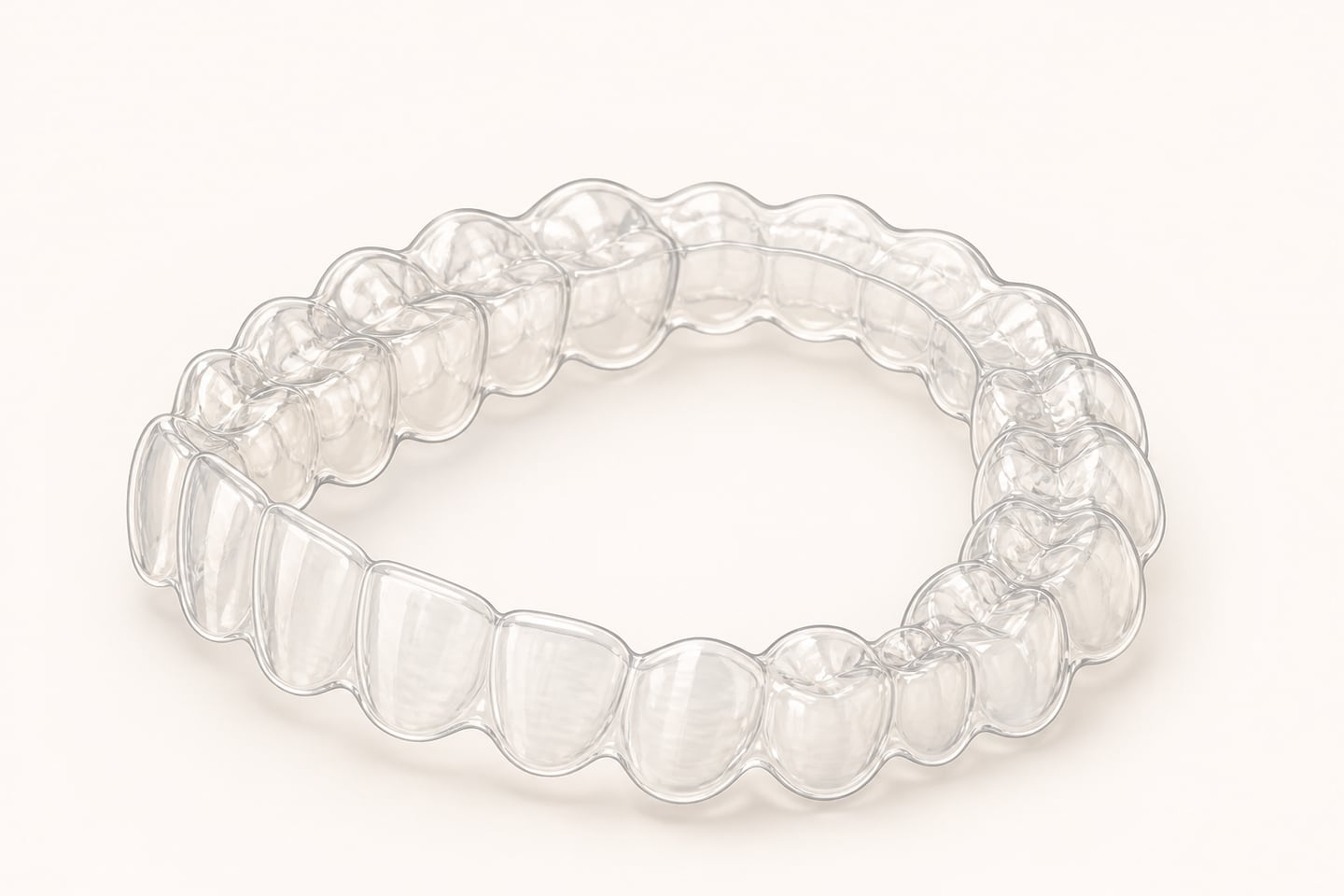
Invisalign straightens teeth with a series of clear, removable aligners changed on a set schedule — treatment often runs 6–18 months depending on the case, followed by retainers.
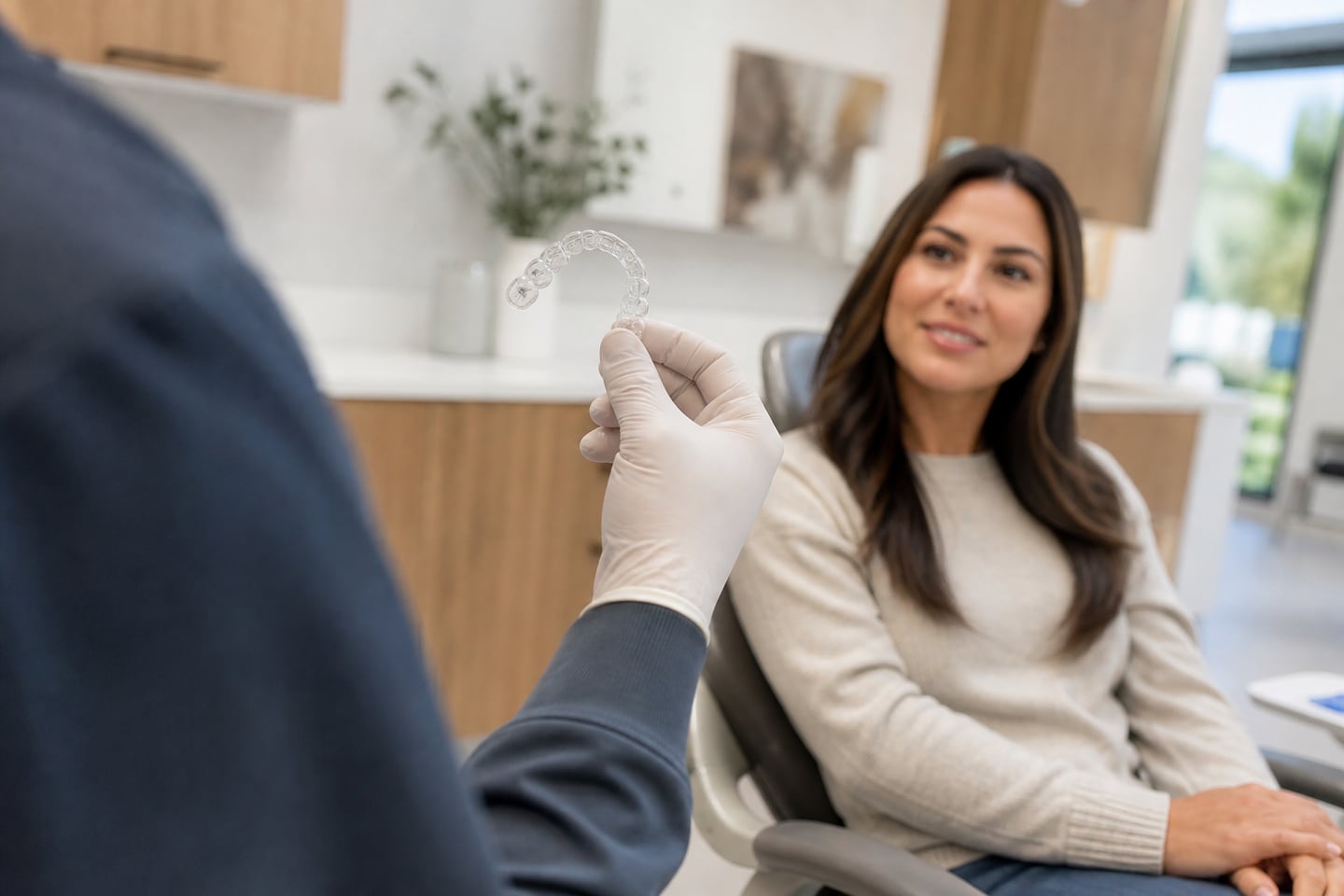
Invisalign moves teeth with a series of clear plastic aligners, each worn for a week or two before the next takes over. Each aligner differs slightly from the last, so teeth move a small, planned amount at a time — no brackets, no wires, and you take the trays out to eat and brush.
It's for crowding, gaps, and many bite problems, in adults and teens who will actually wear the trays — the treatment only works while it is on your teeth, which makes compliance the honest make-or-break factor. What changes: tooth position and how your bite meets. What does not: tooth color or shape, which is why some patients whiten or bond afterward.
Treatment length is case-dependent — often 6–18 months, with minor cosmetic corrections at the short end and complex bite work at the long end. Small tooth-colored attachments are often bonded to certain teeth to help aligners grip; they come off when treatment ends.
Three of the practices publish Invisalign provider-tier claims on their own sites: Beachside Dental Group lists Invisalign Gold Provider 2022, Marina Dentistry lists Invisalign Gold Provider 2024, and Rio Hondo Dental Group lists Invisalign Gold+ Provider 2024. All four offices, including Pacifica Dental, list Invisalign treatment.
The mechanics are simple and worth understanding before you commit:
Both move teeth; neither is universally better. The honest comparison:
If braces are the better tool for your case, you deserve to hear it — see orthodontics for how that decision gets made.
Aligner treatment is quoted after records, not from a menu. What moves the number:
Each office quotes its own fees and publishes its own financing options and membership plan — all third-party financing subject to credit approval. Beachside Dental Group also publishes its own current offers on its site; see the Beachside office page. When you are ready, request an appointment for records and an honest quote.

The process
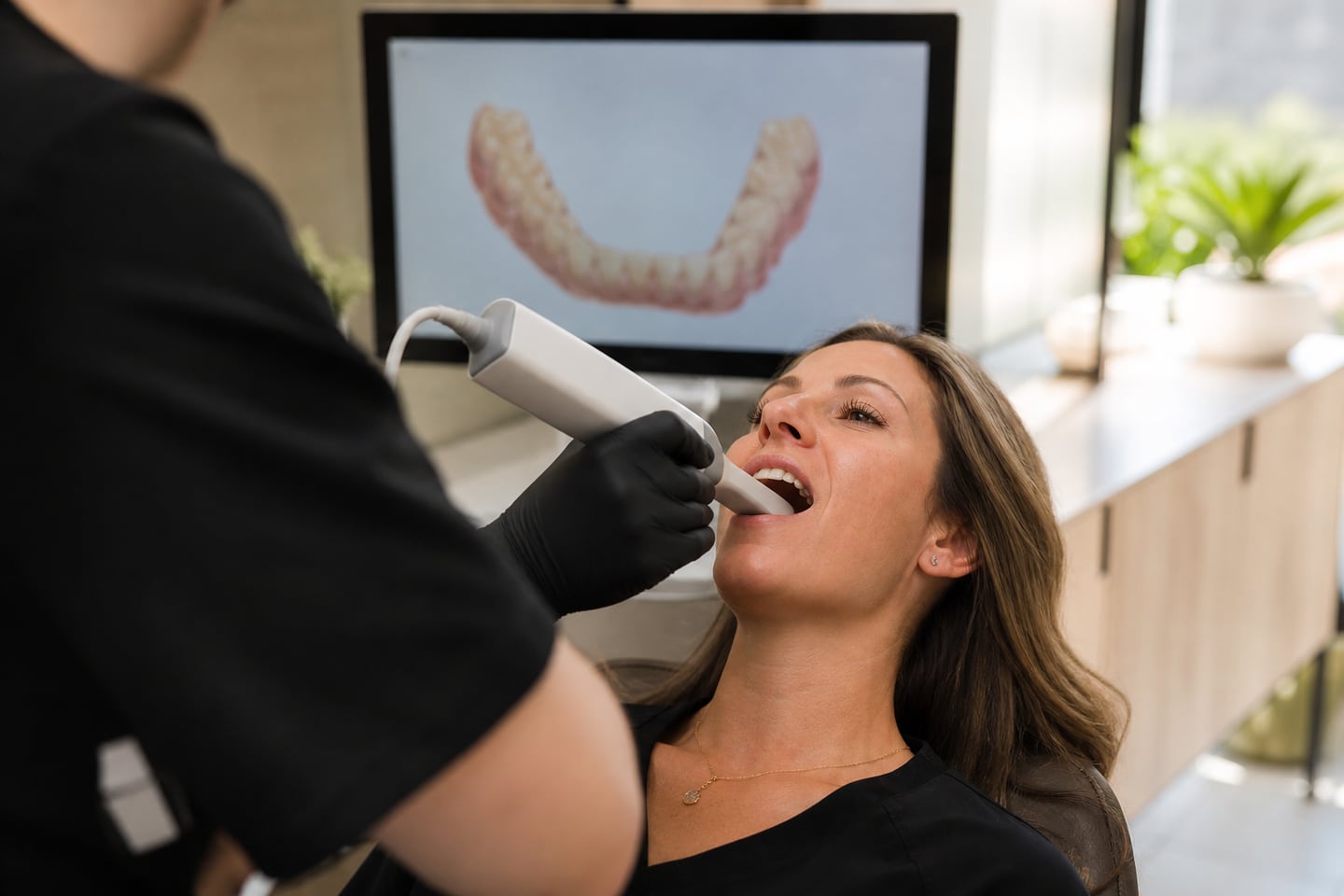
Exam, digital scans or impressions, and photos. You learn whether aligners suit your case — or whether braces would honestly serve it better.
one visit
A digital projection of the movement from current to final position. You approve it before any aligners are made.
Attachments are bonded if the plan uses them, and you learn wear, cleaning, and the switching schedule.
one visit
Wear trays 20–22 hours a day, switch sets as directed, and come in periodically so tracking can be checked.
often 6–18 months, case-dependent
Extra aligners to finish movements that lag the projection — common enough that you should ask up front whether they are included.
adds weeks to months when needed
Attachments come off, retainers go on. This phase is what makes the result last.
ongoing — typically nightly, long-term
Benefits
Clear trays are hard to spot in conversation and photos — the reason many adults who ruled out braces say yes to aligners.
Nothing changes about how you eat, brush, or floss — trays come out, which also means no food restrictions.
A digital projection shows the planned movement from first tray to last, so you approve a destination, not a guess.
Pressure with each new set is real, but there is nothing to poke a cheek or break at dinner.
On their own sites, Beachside lists Invisalign Gold Provider 2022, Marina Dentistry lists Gold Provider 2024, and Rio Hondo lists Gold+ Provider 2024.
Side by side
| Comparison point | Invisalign | Braces |
|---|---|---|
| Visibility | Clear trays — hard to spot in conversation and photos. | Brackets and wires — visible by design. |
| Removability | Comes out for meals and photos — a feature for hygiene, a risk for compliance. | Fixed in place — always working, nothing to forget in a napkin. |
| Eating | No food restrictions; trays come out to eat, teeth are brushed before they go back in. | Hard, sticky, and chewy foods take care to avoid damaging a bracket. |
| Cleaning | Brush and floss as you always have, with the trays out. | Demands careful cleaning around brackets to avoid white-spot marks on enamel. |
| Adjustment visits | New trays at home on a set schedule, with periodic check-ins to confirm tracking. | In-office wire adjustments through treatment. |
| Case range | Well suited to crowding, gaps, and many mild-to-moderate bite problems. | Handles severe rotations, vertical movements, and larger bite corrections more predictably. |
Candidacy
Good candidates: adults and teens with crowding, spacing, relapse after childhood braces, or mild-to-moderate bite problems — and the discipline to wear trays 20-plus hours a day. Adults who had braces years ago and drifted since are one of the most common aligner cases.
Poorer fits: severe rotations, significantly impacted teeth, and some skeletal bite problems, which braces or combined treatment handle more predictably. Active gum disease pauses any tooth movement until it is controlled. And if you know the trays will end up in a drawer — that is not a moral failing, but it is a reason to choose braces, which do not rely on willpower.
For children whose teeth are still developing, timing and options are a pediatric and orthodontic conversation rather than an aligner decision.
Recovery & risks
There is no recovery in the surgical sense — but each new aligner brings a day or two of pressure and tenderness as teeth respond. That is the treatment working, and it fades as the set breaks in. Some people lisp slightly for the first days; it passes as the tongue adapts.
Daily life: trays out for anything but water, teeth brushed before trays go back in, trays cleaned as directed. After treatment ends, retention is the aftercare that matters — retainers as prescribed, because teeth drift back for years after any orthodontic treatment.
Aligner treatment is well-established and low-risk, but honest limits exist:
Cavities and gum health still matter during treatment — trays cover your teeth for 20-plus hours a day, so hygiene lapses concentrate their damage.
Where to go
FAQ
Each new aligner set brings pressure and tenderness for a day or two — that is teeth responding to force, and it fades as the set breaks in. For most people it is discomfort rather than pain, and edges that rub the tongue or cheek early on can be smoothed. Persistent real pain is not normal — call the office.
Often 6 to 18 months, case-dependent: minor cosmetic corrections sit at the short end, bite corrections at the long end. Refinements (extra aligners to finish stubborn movements) can add weeks to months, and consistent wear is the single biggest factor in staying on schedule.
About 20 to 22 — essentially always, except meals and brushing. This is the honest deal-breaker question: aligners only work while they are on your teeth, and under-wearing stalls treatment until the trays no longer fit. If that schedule sounds unrealistic for you, braces may serve you better.
Water, yes. Everything else, no — trays come out for meals and for hot or staining drinks, and teeth get brushed before trays go back in. Eating with trays in damages them, and sugary drinks under a tray hold sugar against your teeth for hours.
For many cases, yes; for some, no. Aligners handle crowding, spacing, and mild-to-moderate bite problems well; certain severe rotations and vertical movements remain more predictable with braces. The consultation should tell you plainly which camp your case is in — and if braces are the better tool, you deserve to hear it.
Yes — after any orthodontic treatment. Teeth drift back for years without retention, so retainers (typically worn nightly, long-term) are part of the treatment, not an optional extra. Budget for occasional replacements over the years, too.
No. Healthy teeth move at any age — the real prerequisites are healthy gums and bone, not a birth year. Adults who had braces as teenagers and drifted since are among the most common aligner cases.
Keep exploring
Orthodontics moves teeth and corrects bites with braces or clear aligners — for teens and adults. The right…
Cosmetic dentistry covers the treatments that change how your smile looks (veneers, whitening, bonding, and…
A smile makeover is one sequenced plan combining treatments (whitening, veneers, aligners, implants, gum…
Both can straighten adult teeth. Aligners win on appearance and daily life; braces win on control for complex…
Often, yes — mild to moderate overbites respond well to clear aligners. Whether yours will depends on what's…
Trays out for anything but water, teeth brushed before they go back in, trays cleaned every day. The rules…
Attachments give the trays grip. Refinements are the extra trays near the end. Retainers are what keeps the…
Tell us what you'd like to change — an exam turns it into options and a plan.