
Beachside Dental Group
18800 Main St Ste 110Huntington Beach, CA 92648
Four named practices — one group. Each office has its own phone line.
Cosmetic
Cosmetic dentistry covers the treatments that change how your smile looks (veneers, whitening, bonding, and clear aligners), planned around your oral health first at four Southern California offices.

Cosmetic dentistry is any treatment chosen mainly for how it changes the look of your teeth — their color, shape, size, alignment, or the way they show when you smile. The most common options are professional whitening, porcelain veneers, cosmetic bonding, and clear-aligner treatment with Invisalign.
It suits people whose teeth work fine but who are unhappy with what they see in the mirror or in photos. What changes is specific and plannable: a shade, a chipped edge, a gap, a crooked front tooth. Good cosmetic dentistry starts by naming the exact thing you want changed, then matching the smallest treatment that changes it.
One rule comes before any of it: healthy teeth and gums first. Cavities and gum disease get treated before cosmetic work, because whitening, bonding, and veneers all perform poorly, and can fail, on unhealthy teeth. If it has been a while since an exam and cleaning, that is the honest starting point.
Most cosmetic complaints map to one of four treatments. A consultation confirms the match, but this is the starting map:
The sequence matters. Whitening comes before veneers or bonding, because restorations are color-matched to your teeth and do not whiten afterward. Alignment usually comes before veneers, because straightening a tooth may remove the need to cover it at all.
Cosmetic treatment is priced case by case, because the honest answer to "what will it cost" depends on what your teeth need. These are the factors that move the number:
Because plans differ, each office quotes after an exam — and each publishes its own financing options and membership plan. Insurance rarely covers purely cosmetic treatment, though work that also restores a damaged tooth may be partly covered; the office checks this before you commit to anything.
Ready to put a real plan and a real number to it? Request an appointment for a cosmetic consultation at the office nearest you.

The process
You point to what bothers you; the dentist examines teeth, gums, and bite, and confirms which treatments can actually deliver the change you want.
one visit
Health issues first, then alignment, then whitening, then any veneers or bonding — with your office's pricing and financing routes laid out before you commit.
Simple bonding or an in-office whitening session can finish in a single appointment; veneers usually take two or three visits; aligner treatment runs months.
varies by treatment
Final polish and bite check, then a maintenance plan — because whitening fades and every restoration wears.
ongoing
Benefits
The consultation maps your specific complaint to the smallest treatment that fixes it — you are not sold a bundle when a single bonded chip repair would do.
Whitening before restorations, alignment before veneers — ordering treatments correctly is what makes the final shades and shapes agree.
Whitening and bonding change a smile without removing enamel; irreversible steps are reserved for cases where they genuinely earn their place.
Decay and gum problems are found and treated first, so cosmetic work is built on teeth that can hold it.
Cosmetic consultations are available in Huntington Beach, Marina del Rey, and Downey, and each office publishes its own financing and membership options.
Candidacy
You are likely a fit if your teeth and gums are healthy and you have a specific cosmetic complaint you can point to. Whitening suits surface discoloration; bonding and veneers suit shape and edge problems; aligners suit crowding and gaps.
You are not a fit yet if you have untreated decay or gum disease — that comes first, every time. Deep internal discoloration responds unevenly to whitening. Heavy clenching or grinding does not rule out veneers or bonding, but it changes material choices and usually adds a nightguard. And if your main complaint is a missing tooth, the conversation is dental implants or bridges rather than cosmetic dentistry.
Recovery & risks
Most cosmetic treatment has little or no downtime. Whitening can leave teeth temporarily sensitive for a day or two. Bonded and veneered teeth may feel slightly different to your tongue for a few days, and mild soreness after longer appointments settles quickly.
Maintenance is the real 'recovery': normal brushing and flossing, regular cleanings, a nightguard if you grind, and touch-up whitening as color drifts. None of these results are maintenance-free, and your dentist should tell you the expected upkeep for each option before you choose it.
Every cosmetic option has real trade-offs, and outcomes vary from person to person. The full list:
A good consultation names these trade-offs for your specific case before you spend anything.
Where to go
FAQ
Mostly no, honestly described: whitening can cause a day or two of temporary sensitivity, bonding often needs no numbing at all, and veneer preparation is done under local anesthetic — you feel pressure and vibration, not pain. Expect some soreness or sensitivity for a few days after veneer visits; it settles on its own.
Usually not when treatment is purely cosmetic. When the work also restores a damaged tooth (a chipped tooth rebuilt with bonding or a crown), part of it may qualify, and the office checks your specific plan before you commit. Financing and each office's membership plan are the common routes for the cosmetic share.
With a consultation, not a decision. Describe what bothers you; the exam determines which treatment actually changes it. You should leave with a written plan and its cost before committing to anything.
Yes — with bonding, a single veneer, or a crown, depending on the damage. Fair warning from any honest dentist: matching one restoration to the surrounding natural teeth is the hardest shade work in dentistry, and if you want whitening, it must happen before the match is made.
It varies by treatment and habits: whitening fades over months to a few years depending on coffee, wine, and tobacco; bonding typically needs repair sooner than porcelain; veneers last many years with care but eventually need replacement. Nothing cosmetic is maintenance-free — ask what upkeep each option needs before you choose.
Yes, if you want a lighter shade — always before veneers, bonding, or crowns. Restorations are color-matched once and never whiten afterward, so the order determines whether everything matches at the end.
Keep exploring
Porcelain veneers are thin, custom shells bonded to the front of teeth to change their shape, color, and…
Professional whitening lifts stains from enamel using stronger, dentist-supervised gels than store kits —…
A smile makeover is one sequenced plan combining treatments (whitening, veneers, aligners, implants, gum…
Invisalign straightens teeth with a series of clear, removable aligners changed on a set schedule — treatment…
Most implants are titanium; some are a white ceramic called zirconia. How they differ in track record…
Yes, for many people — but the front of the mouth is the hardest place to make an implant look natural. What…
A whitening result fades at the pace of your coffee, your wine and your tobacco use. What the realistic range…
Peroxide strength, tray fit, gum protection and whether anyone examined the teeth first. Store strips work on…
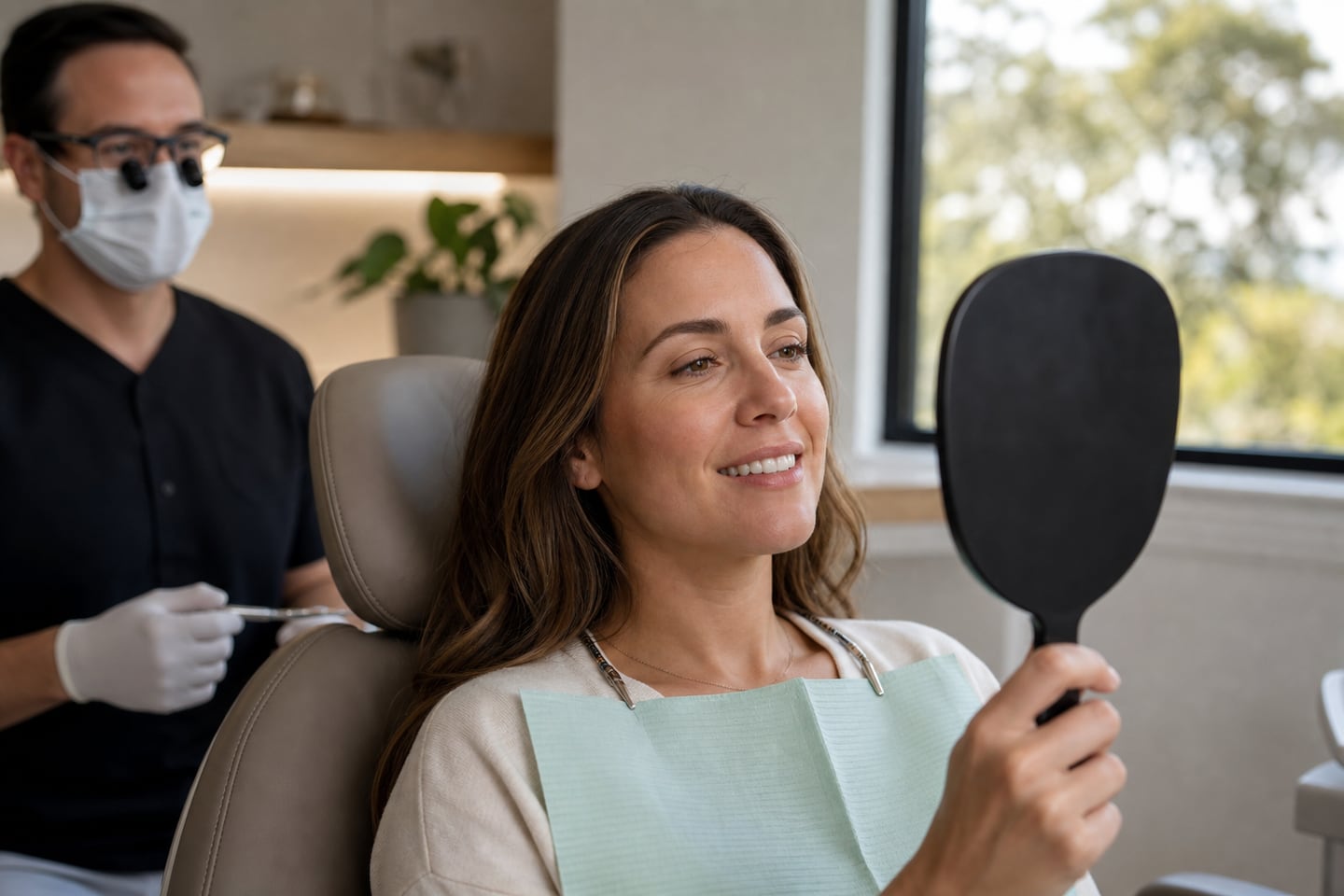
Tell us what you'd like to change — an exam turns it into options and a plan.