
Beachside Dental Group
18800 Main St Ste 110Huntington Beach, CA 92648
Four named practices — one group. Each office has its own phone line.
Cosmetic
Porcelain veneers are thin, custom shells bonded to the front of teeth to change their shape, color, and symmetry — a durable fix for chips, wear, gaps, and deep stains.
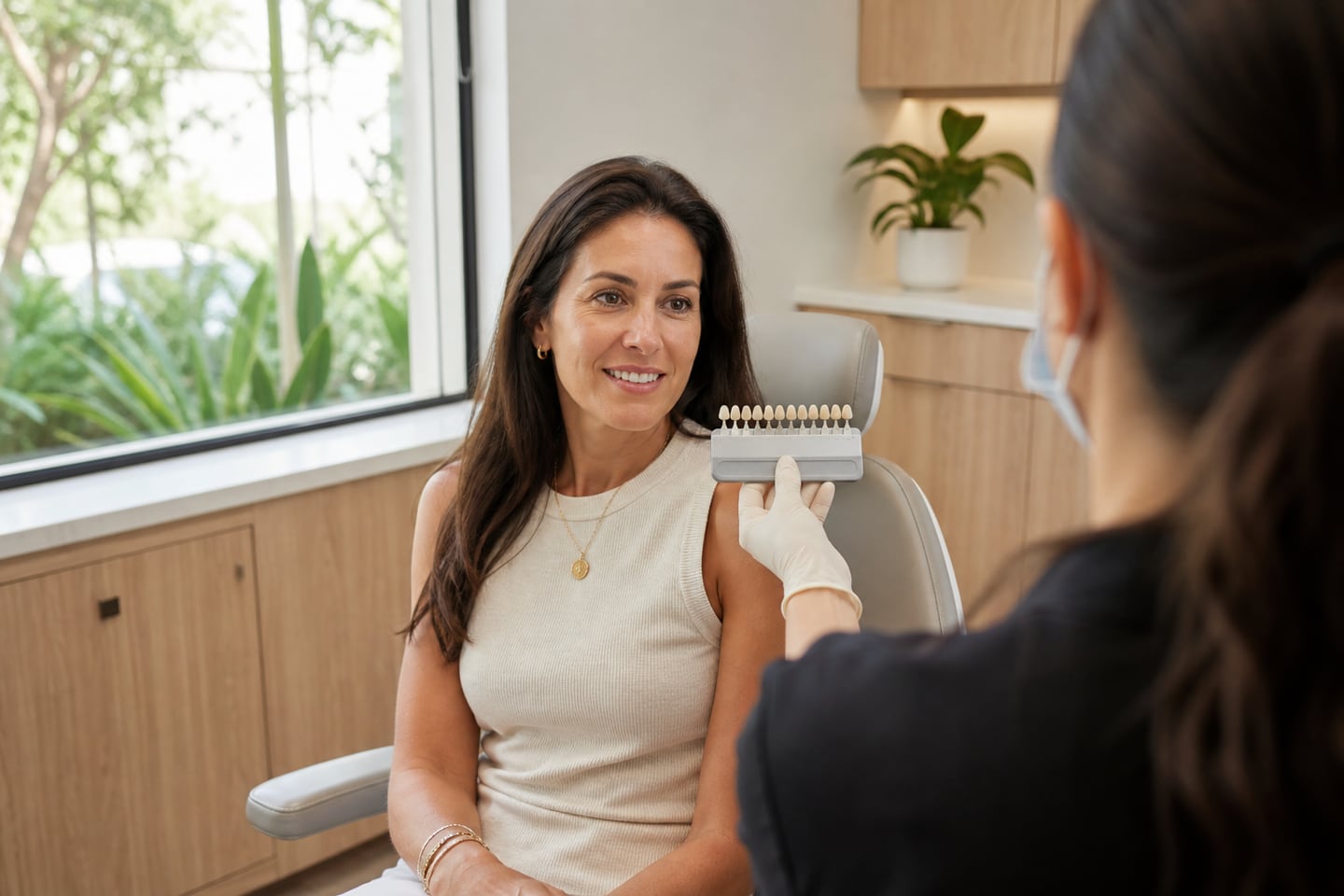
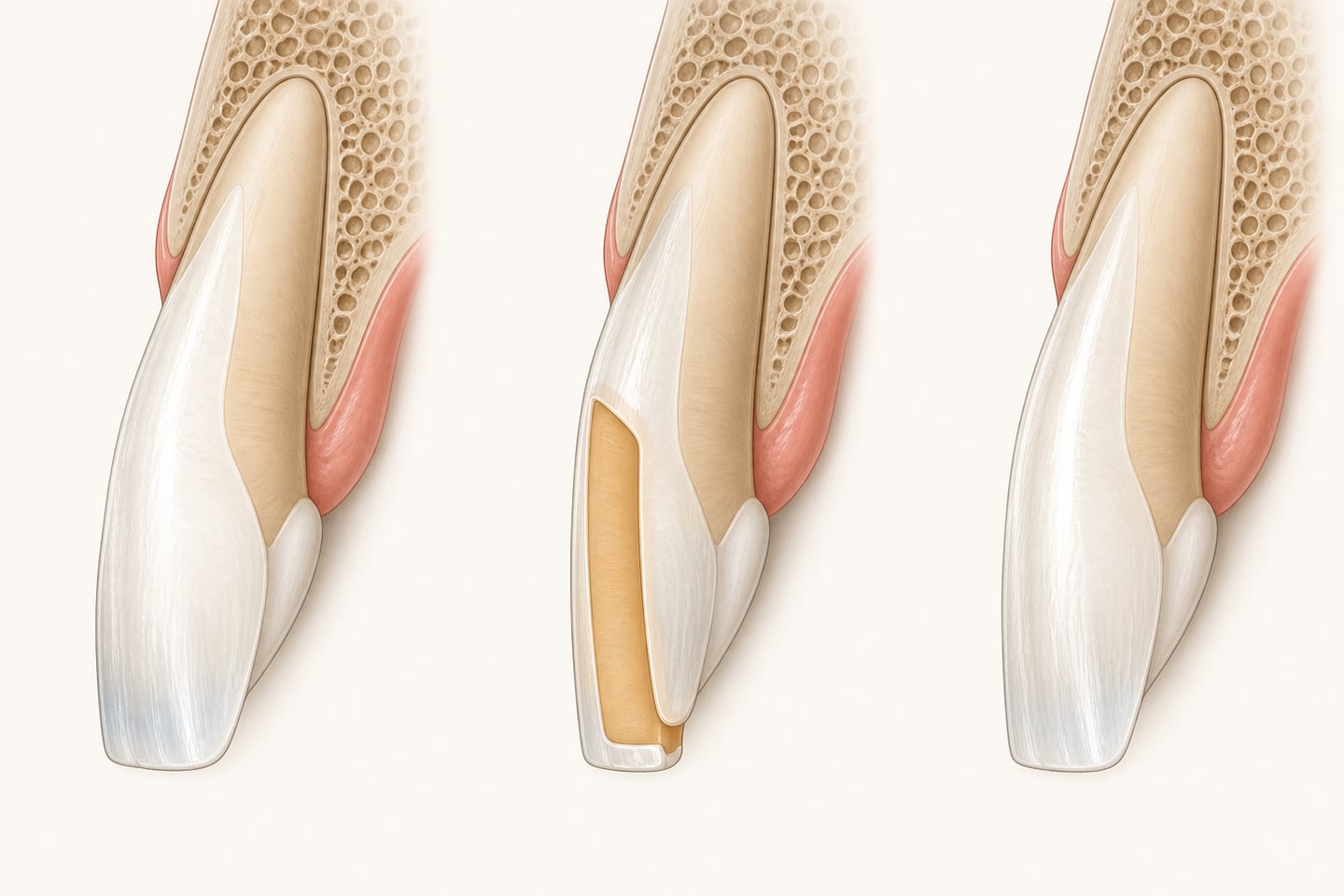
A veneer is a thin shell of porcelain, custom-made in a dental lab and bonded to the front surface of a tooth. It changes the tooth's shape, color, length, or surface in one move — which is why veneers are the standard answer for front teeth that are chipped, worn, unevenly shaped, gapped, or too deeply stained for whitening to fix.
Veneers are for people with specific front-tooth complaints and healthy mouths. What changes: the teeth you and everyone else see when you talk. What does not change: how your back teeth chew, and the fact that the tooth underneath was reshaped to make room — the irreversible part, covered honestly under risks below.
Most cases treat two to eight upper front teeth so the result reads as one consistent smile. A single veneer is possible but is the hardest color match in dentistry — an honest dentist will tell you when bonding or a crown serves a single tooth better. Pacifica Dental's own menu also lists Lumineers, a branded thin-preparation veneer — worth asking about at that office if you are comparing options.
Bonding shapes tooth-colored composite directly on the tooth in one visit; veneers use lab-made porcelain. The honest comparison:
A fair rule: bonding for small, low-stress repairs you are comfortable maintaining; veneers when you want a larger or longer-lived change and accept the irreversible preparation.
Veneers are quoted per tooth, after an exam. What moves the number:
None of this becomes a real number until a dentist sees your teeth — request an appointment for a consultation. Each office publishes its own financing options and membership plan; all third-party financing is subject to credit approval.

The process
Exam, photos, and a written plan naming how many teeth, what shape, and what shade. You should see and approve this before anything irreversible happens.
one visit
A thin layer of enamel is removed under local anesthetic, impressions or digital scans are taken, and temporary veneers protect the teeth.
one visit for most cases
The porcelain is custom-made to the agreed design. Turnaround depends on the lab and the case.
typically a few weeks
Try-in first (you see them before they are cemented), then bonding, polishing, and bite verification.
one visit
Bonding and gums checked, bite fine-tuned, and a nightguard fitted if you clench or grind.
Benefits
One veneer corrects a chip, a deep stain, and a worn edge simultaneously — problems whitening and bonding can only partly address.
Porcelain holds its shade better than natural enamel and far better than bonding composite — coffee and red wine are much less of a threat.
With sound bonding, a balanced bite, and a nightguard when needed, veneers last many years — though not forever, and that is said plainly up front.
Shade and shape are planned and shown to you before any tooth is prepared — the irreversible step never comes first.
Porcelain is slightly translucent the way enamel is, which is why well-made veneers look like teeth rather than coverings.
Candidacy
Good candidates have healthy gums, enough enamel to bond to, and a specific front-tooth complaint: chips, wear, stubborn stains, small gaps, or mild unevenness.
Veneers are the wrong tool when teeth are significantly crooked or crowded — moving them first with aligners is more conservative and often removes the need for veneers entirely. They are also wrong over active decay or gum disease, on teeth with too little enamel, and on heavily broken-down teeth, where crowns protect better. Heavy grinders can get veneers, but only with a nightguard plan; unmanaged grinding shortens any veneer's life.
If your goal is simply whiter teeth and they are otherwise fine, start with whitening — it costs less and keeps your enamel.
Recovery & risks
Expect mild sensitivity to cold and some gum tenderness for a few days after preparation, and again briefly after bonding. Temporaries feel less smooth than the final veneers and occasionally come loose — call the office if one does; re-cementing is routine.
After bonding: normal eating the same day, and care like natural teeth — brushing, flossing, regular cleanings. Avoid opening packages or biting hard objects with veneered edges, wear the nightguard if prescribed, and know that neighboring natural teeth can drift in shade over years while porcelain stays put — a reason some patients maintain light whitening on untreated teeth.
The central fact about veneers: preparation removes enamel, and enamel does not grow back. A prepared tooth will need a veneer or crown for the rest of its life. This is a commitment, not a try-out — be certain before you start.
None of this argues against veneers — it argues for choosing them with clear eyes, from a dentist willing to show you the full plan first.
Where to go
FAQ
The preparation visit uses local anesthetic — you feel pressure and vibration rather than pain. Afterward, expect a few days of cold sensitivity and gum tenderness, and again briefly after bonding; both usually settle on their own. Persistent pain is not normal — call the office if it happens.
Many years with good care, but not forever. Porcelain resists stain and wear well, yet veneers can chip or debond, and all eventually need replacement. Longevity varies with grinding habits, bite forces, and hygiene — a nightguard extends it if you clench or grind.
No. Standard veneers require removing a thin layer of enamel that never grows back, so a prepared tooth will always need a veneer or crown. That is the single most important fact to weigh before saying yes — and why the full plan should be shown to you before any preparation happens.
A veneer covers the front surface of a tooth and is a cosmetic tool for mostly intact teeth; a crown wraps the whole tooth and is a structural tool for broken-down or root-canal-treated teeth. If a tooth has large fillings or fractures, a crown often protects it better — the exam determines which is honest for your tooth.
As few as accomplish your goal. Many cases treat the teeth visible when you smile (often the upper front teeth) so the result reads consistently; a single veneer is possible but is the hardest color match. The number is a planning decision you approve in advance, not something decided in the chair.
Porcelain itself resists staining well — better than natural enamel. The bonded edges can pick up stain over years, and neighboring natural teeth can drift in shade, which is why some patients maintain light whitening on untreated teeth to keep the match.
Keep exploring
Cosmetic dentistry covers the treatments that change how your smile looks (veneers, whitening, bonding, and…
Professional whitening lifts stains from enamel using stronger, dentist-supervised gels than store kits —…
A smile makeover is one sequenced plan combining treatments (whitening, veneers, aligners, implants, gum…
A crown covers and strengthens a damaged tooth so you can chew on it again. Learn when a crown beats a…
Healthy gums, enough enamel and no active decay come before any porcelain. Why grinding changes the plan, why…
Bonding adds resin to the tooth you have and can usually be undone. A veneer removes enamel and cannot. Tooth…
Traditional veneers remove enamel, and enamel does not grow back. That is not damage by accident, it is the…
Composite veneers are done in one visit and can be patched in the chair. Porcelain veneers last longer and…
Tell us what you'd like to change — an exam turns it into options and a plan.