
Beachside Dental Group
18800 Main St Ste 110Huntington Beach, CA 92648
Four named practices — one group. Each office has its own phone line.
Cosmetic
Professional whitening lifts stains from enamel using stronger, dentist-supervised gels than store kits — with an exam first, so results are even and sensitivity is managed honestly.
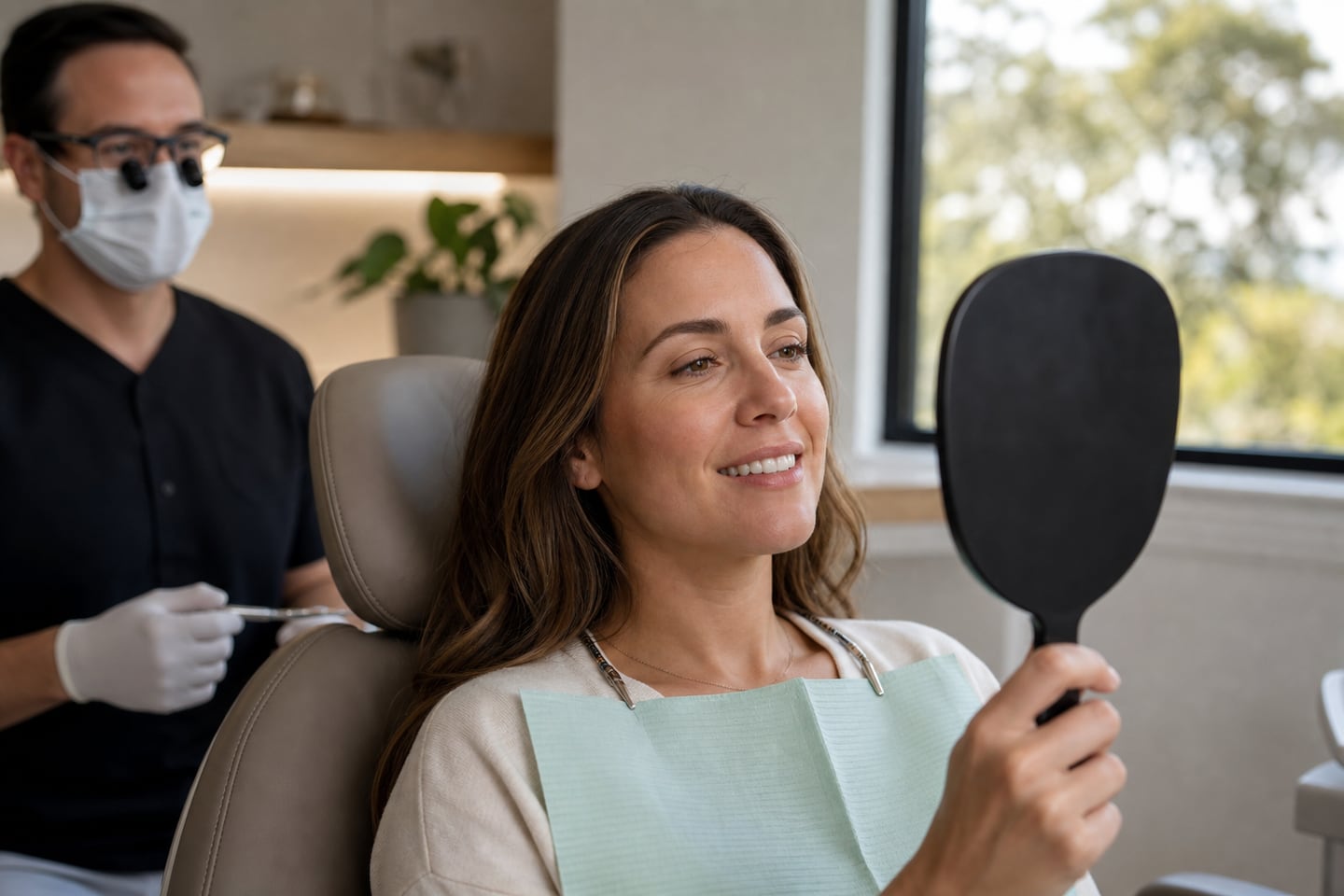
Professional teeth whitening uses peroxide-based gels, at concentrations only a dental office can use, to break up stains in and just under the enamel. Done in the chair or with custom take-home trays, it is the most conservative cosmetic treatment there is: no drilling, no enamel removed, nothing bonded.
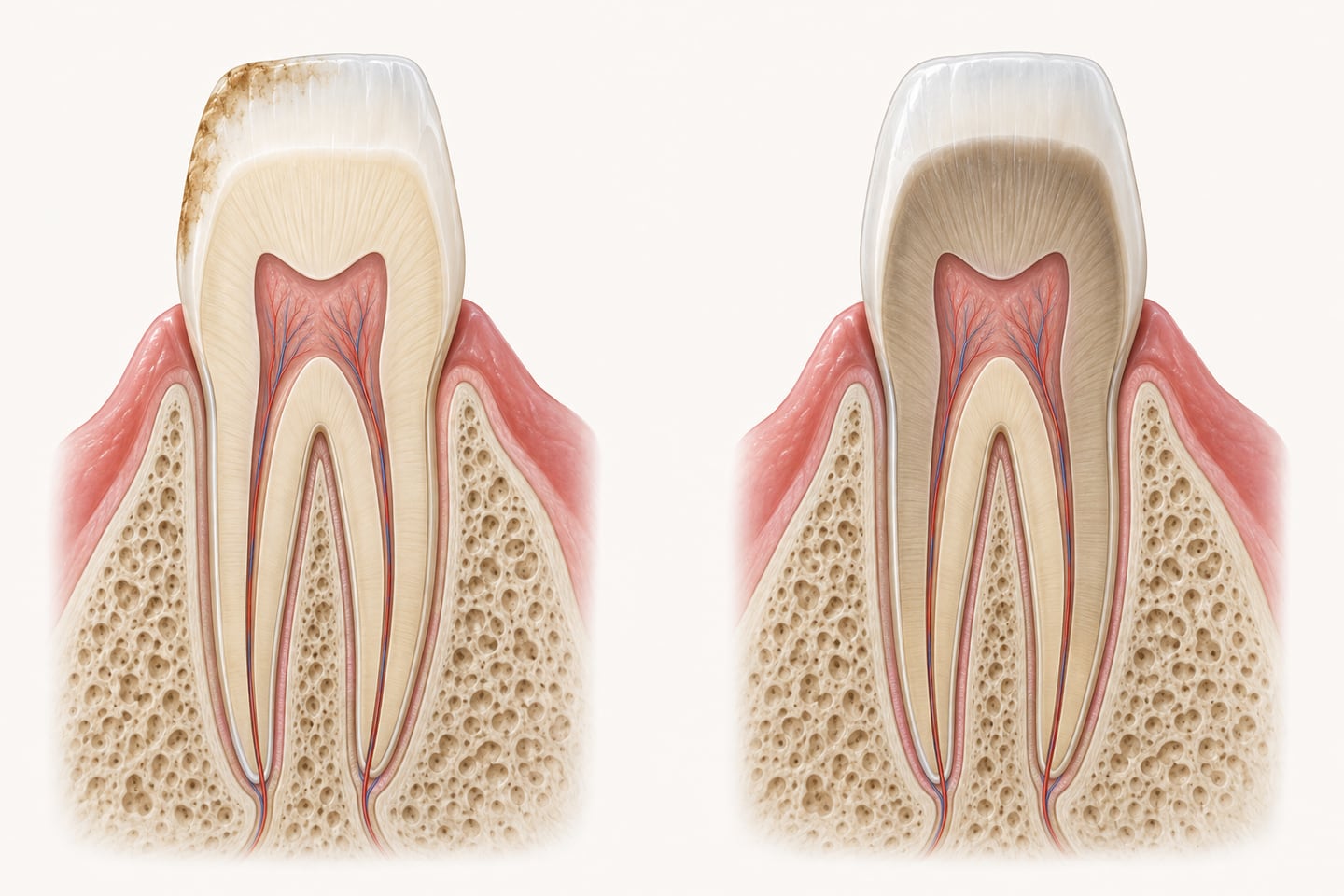
Its target is surface and age-related discoloration — coffee, tea, red wine, tobacco, and the gradual yellowing of enamel over time. What changes: shade. What does not: shape, alignment, or the color of any fillings, crowns, or veneers, which stay the color they were made.
Store kits and whitening strips genuinely work for mild staining — the honest difference is strength, fit, and supervision:
A fair recommendation: try strips for mild, even staining if you want. See a dentist when results plateau, when sensitivity develops, or when a single dark tooth is the problem — that last one needs a diagnosis, not more gel. Whitening is also the standard first step before veneers or bonding, since restorations are matched to your shade once and never whiten afterward.

The process
Confirms the staining type will respond, screens for decay and exposed roots, and records your starting shade so change is measurable.
one visit
Gums are protected, professional-strength gel is applied and refreshed in rounds, and you leave with the result the same day.
about an hour in the chair for most sessions
Trays molded to your teeth plus professional gel, worn on a schedule the dentist sets.
often one to two weeks of daily wear
Shade drifts back at the pace of your coffee, wine, and tobacco habits; periodic touch-ups are shorter and simpler than the first round.
as needed
Benefits
No drilling, no enamel removal, nothing bonded — whitening changes shade while leaving teeth exactly as they were.
Professional-strength gel in custom trays or a supervised in-office session whitens further and more evenly, with gums protected.
Decay, exposed roots, and internal discoloration are found before gel touches them — the difference between whitening that works and whitening that hurts.
A supervised in-office session delivers visible change in about an hour of chair time for most patients.
If veneers or bonding are in your future, whitening first establishes the lighter shade everything else is matched to.
Candidacy
Whitening fits healthy mouths with staining on or in the enamel. It responds most readily to yellow-brown discoloration; gray or banded discoloration (including tetracycline-related staining) responds slowly and sometimes barely, which is worth knowing before you spend anything.
It is not for you right now if you have untreated decay, gum disease, or exposed root surfaces — gel on those hurts and whitens unevenly, so those get treated first. It does not change restorations: if you have front-tooth crowns, veneers, or fillings, plan the sequence with the dentist, because whitening around them can leave mismatches. A single dark tooth usually signals an internal problem worth diagnosing before any whitening. And it is usually advised to wait if you are pregnant or nursing — not because harm is proven, but because deferring is the cautious default.
Recovery & risks
No downtime. The common after-effect is temporary sensitivity (brief twinges to cold for a day or two) and occasionally mild gum irritation where gel touched tissue. Both settle on their own; a sensitivity toothpaste before and after treatment helps.
For the first day or two, results hold better if you go easy on strongly staining food and drink. After that, normal life: the shade fades gradually, and touch-ups keep it where you want it.
Whitening is low-risk, not no-risk, and results genuinely vary:
Results fade over time with staining habits — expect gradual drift and plan on touch-ups rather than a one-time fix.
Where to go
FAQ
It can cause temporary sensitivity (brief twinges to cold for a day or two after treatment) and occasionally mild gum irritation. It should not cause real pain. If your teeth are already sensitive, say so: gel strength and wear time can be adjusted.
Months to a couple of years, honestly depending on coffee, tea, red wine, and tobacco habits. The shade fades gradually rather than suddenly, and touch-ups are shorter and simpler than the first treatment.
No — restorations keep the color they were made, which is one of the main reasons to whiten under supervision. If you have visible restorations, the dentist plans the sequence so you do not end up with mismatched shades; sometimes that means replacing a front filling after whitening.
It genuinely varies. Yellow-toned staining responds most readily, gray or banded discoloration responds less, and every person's enamel has a natural shade limit that more gel will not push past. An exam and a starting-shade record give you an honest projection instead of a promise.
For mild, even, surface-level staining — often yes, and it is fair to try them. See a dentist when results plateau, when sensitivity develops, or when one dark tooth stands out, because a single dark tooth needs a diagnosis, not more gel.
Keep exploring
Cosmetic dentistry covers the treatments that change how your smile looks (veneers, whitening, bonding, and…
Porcelain veneers are thin, custom shells bonded to the front of teeth to change their shape, color, and…
A smile makeover is one sequenced plan combining treatments (whitening, veneers, aligners, implants, gum…
A whitening result fades at the pace of your coffee, your wine and your tobacco use. What the realistic range…
Peroxide strength, tray fit, gum protection and whether anyone examined the teeth first. Store strips work on…
Whitening changes the color of natural enamel and nothing else. Veneers change color, shape and apparent…
Trays out for anything but water, teeth brushed before they go back in, trays cleaned every day. The rules…

Tell us what you'd like to change — an exam turns it into options and a plan.