
Beachside Dental Group
18800 Main St Ste 110Huntington Beach, CA 92648
Four named practices — one group. Each office has its own phone line.
Orthodontics
Orthodontics moves teeth and corrects bites with braces or clear aligners — for teens and adults. The right tool depends on the case, not the marketing.
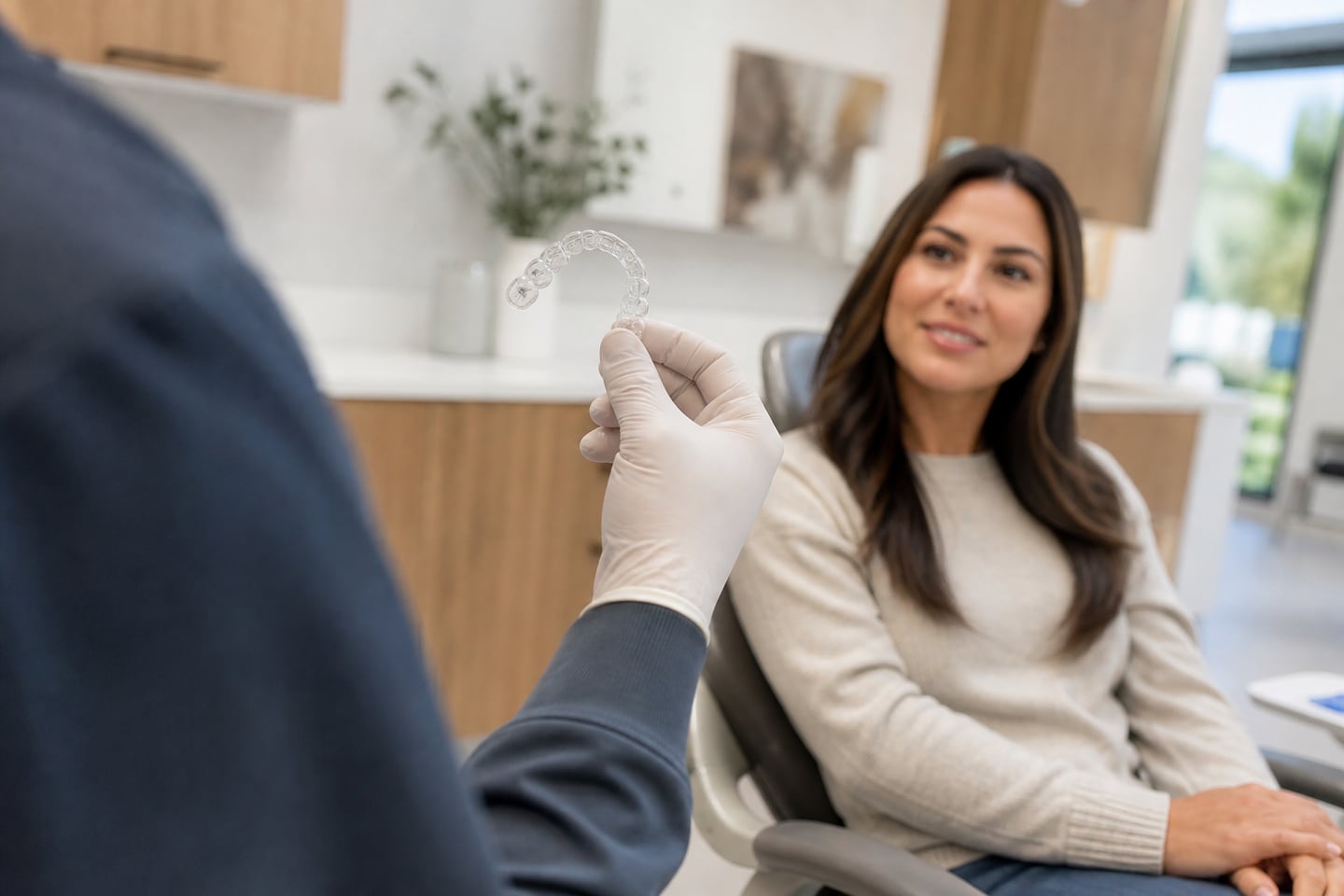
Orthodontics is the branch of dentistry that moves teeth and aligns bites — with braces, clear aligners, or occasionally both in sequence. The goal is not only straight front teeth: a corrected bite spreads chewing forces properly, makes cleaning easier, and reduces abnormal wear.
It treats crowding, spacing, rotated teeth, and bite problems (overbites, underbites, crossbites, open bites) in teens and adults alike. What changes: where your teeth sit and how they meet. Treatment time varies widely with complexity, from months for minor corrections to a few years for full bite work.
Adult orthodontics is routine, not exceptional. Healthy teeth move at any age; the real adult prerequisites are gum health and realistic pacing, since adult bone remodels more slowly than a teenager's, so comparable movements can take somewhat longer.
Both are tools for the same job, with different strengths:
The honest deciding questions: how complex is the movement, and will removable trays really stay in? Records at a consultation answer the first; only you can answer the second.

The process
Exam, scans or impressions, photos, and bite analysis — ending in an honest recommendation of braces, aligners, or either.
one visit
Brackets bonded, or the first aligners fitted with any attachments the plan uses.
one visit
Adjustments or tray changes on a set schedule, with periodic checks that movement is tracking to plan.
varies widely — months for minor corrections, longer for full bite work
Appliances come off, retainers go on — and stay in the routine, because teeth drift without them.
ongoing
Benefits
Orthodontics corrects how all your teeth meet — spreading chewing forces, easing cleaning, and reducing abnormal wear.
Braces and aligners are both on the table, and the recommendation follows your case's complexity rather than a house preference.
Alignment preserves enamel — often the more conservative answer than veneering crooked teeth straight.
Healthy teeth move at any age; adult treatment simply plans around gum health and adult bone pacing.
Candidacy
Candidates: anyone with crowding, spacing, or bite problems and a healthy foundation — no active gum disease or untreated decay. Teens are the classic case because growth assists movement; adults with lifelong crowding or relapse after childhood braces are equally treatable.
Considerations that shape the plan rather than rule you out: previous orthodontic work, missing teeth (a planned implant space changes the design, because implants cannot move once placed), grinding, and jaw-joint symptoms. Questions about a young child's timing belong with a pediatric evaluation.
Recovery & risks
Expect soreness for a few days after braces are placed or adjusted, and pressure with each new aligner set — chewing feels tender, then normal. Orthodontic wax handles early bracket irritation; aligner edges can be smoothed if they rub.
Afterward, retainers are what protect the result. Teeth drift for years after any treatment; retainers worn as directed (typically nightly, long-term) keep the alignment you paid for.
Orthodontic treatment is safe and well-studied, with specific honest risks:
Where to go
FAQ
No — teeth move at any age when gums and bone are healthy. Adult treatment sometimes runs a bit slower than a teenager's and requires gum health first, but neither is a reason not to start; it is a reason to plan properly.
It depends on two things: how complex your case is, and how honest you can be about wearing removable trays 20-plus hours a day. Braces are stronger for complex movements and cannot be under-worn; aligners are nearly invisible and easier to clean around. Records at a consultation answer the first question — only you can answer the second.
It varies widely with complexity (months for minor corrections, up to a few years for full bite work), and estimates can shift mid-treatment, because teeth are biology, not machinery. Ask for the honest range for your case at the records visit, not a single number.
In practical terms, yes — nightly wear long-term is the standard advice, because teeth drift back for years after any treatment. Think of retainers as protecting the result you already paid for; relapse without them is the norm, not bad luck.
Placement itself does not, but the days after placement and each adjustment bring real soreness — chewing feels tender, then settles. Orthodontic wax handles early bracket irritation, and over-the-counter pain relief on adjustment days is common. Constant or sharp pain is not normal; call the office.
Keep exploring
Invisalign straightens teeth with a series of clear, removable aligners changed on a set schedule — treatment…
A smile makeover is one sequenced plan combining treatments (whitening, veneers, aligners, implants, gum…
Cosmetic dentistry covers the treatments that change how your smile looks (veneers, whitening, bonding, and…
Both can straighten adult teeth. Aligners win on appearance and daily life; braces win on control for complex…
Often, yes — mild to moderate overbites respond well to clear aligners. Whether yours will depends on what's…
Attachments give the trays grip. Refinements are the extra trays near the end. Retainers are what keeps the…

Tell us what you'd like to change — an exam turns it into options and a plan.