
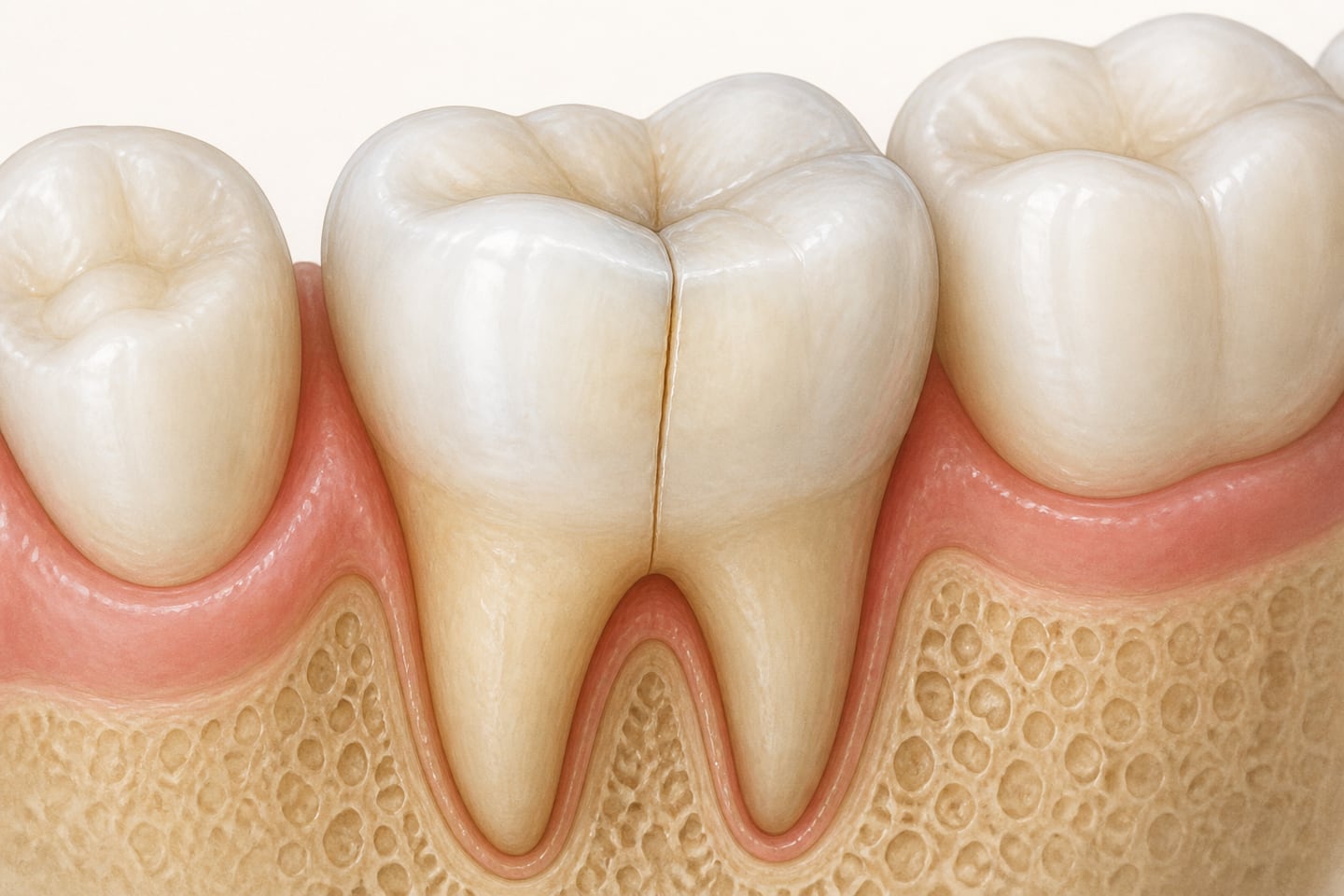
Call a dentist the same day if the tooth hurts, bleeds from inside, feels loose, or has a sharp edge cutting your mouth. In the meantime, rinse with warm water, save any pieces, and stop chewing on that side. A small chip that does not hurt can usually wait a day or two for a planned visit. The first 24 hours are about protecting the tooth and sorting out which kind of damage you have, because that decides both the urgency and the repair.
The first ten minutes
- Rinse your mouth gently with warm water to clear debris.
- Find any broken pieces and keep them. Put them in a small container with a little milk or your own saliva. Sometimes a fragment can be bonded back.
- If there is bleeding, press clean gauze or a damp cloth on the spot for a few minutes.
- Hold a cold compress against the cheek if there is swelling or the area took a blow.
- Stop chewing on that side. Stick to soft foods until you are seen.
Chip, crack, or break: which do you have?
A chip is a small piece of enamel gone, usually from an edge or corner. It usually does not hurt and is mostly a cosmetic and sharpness problem. A crack is a line through the tooth that you may not be able to see. The clue is pain when you bite down or when you release the bite, and sharp sensitivity to cold. Cracks can run below the gumline, which makes them the most deceptive of the three. A break is a larger piece missing. If you can see yellowish tooth underneath, the inner layer is exposed. If you see pink or red, or the tooth bleeds from the center, the nerve is exposed, and that is a same-day problem.
One common pattern: a corner breaks off a back tooth that already has a large filling. The filling survived, the tooth wall around it did not. These usually need a crown rather than a bigger filling.
Same day versus can wait
Call the same day for pain when biting, sensitivity that lingers, bleeding from inside the tooth, a visibly exposed nerve, a tooth that moves, or an edge that is cutting your tongue or cheek. Any of those is an emergency visit, and the office will tell you where to go and what to do on the way. A small chip with no pain and no sensitivity can be booked within a few days. Do not let it slide past that, because chips catch food, and the weakened edge can break further.
When the ER comes first
Go to the emergency room before the dentist if the injury came with a possible broken jaw, bleeding that will not stop with steady pressure, a head injury, or any loss of consciousness. The hospital handles the dangerous part. The tooth is repaired afterward.
Protecting the tooth until you are seen
- An over-the-counter pain reliever, taken as its label directs, can take the edge off. Never hold aspirin against the gum. It burns the tissue.
- Cover a sharp edge with orthodontic wax or a bit of sugar-free gum.
- Pharmacies sell temporary dental filling material. It can cover an exposed area for a day or two. Household glue of any kind is never an option.
- Avoid very hot, very cold, and sweet foods and drinks, which trigger an exposed tooth.
- Do not test the tooth by biting on it to see if it still hurts. That is how cracks grow.
What the dentist will check
Expect an exam, an X-ray, and a bite test where you close on a small tool tooth by tooth to find which one reacts. Cracks often do not show on X-rays, so the dentist may use a bright light, a dye, or magnification to trace the line. The key question is whether the damage has reached the nerve and whether the crack extends below the gum or into the root. The answer sets the repair.
The likely repairs, from minor to major
A tiny chip may simply be smoothed and polished. A small to moderate chip is usually repaired with tooth-colored bonding or a filling, often in one visit. A larger break, a cusp fracture, or a crack that weakens the tooth generally calls for a crown, which holds the remaining tooth together so the crack cannot spread. If the nerve is exposed or the crack has reached it, root canal therapy comes first and a crown follows. A crack that runs through the root or below the bone usually cannot be saved. In that case the tooth is removed and replaced, most often with an implant or a bridge. Outcomes depend on how far the damage has traveled, which is why earlier is better.
What the repair costs depends on
Size of the damage, whether the nerve is involved, the material used, and whether the visit is same-day all affect the bill. Insurance usually treats fillings, crowns, and root canals differently, so ask the office to check your plan before work begins. Financing can spread a crown or root canal into monthly payments, subject to credit approval.
Why a crack should not wait
Cracks do not heal and they do not stay put. Every bite pushes the line a little further. A crack caught early is often a crown. The same crack months later can be a root canal, and later still an extraction. If a tooth has hurt on biting for weeks, that is the visit to book now. For other situations, our guide to handling a dental emergency covers knocked-out teeth, lost crowns, and severe toothaches. Call the office nearest you for anything urgent, or request an appointment for a chip that can wait a day or two.