
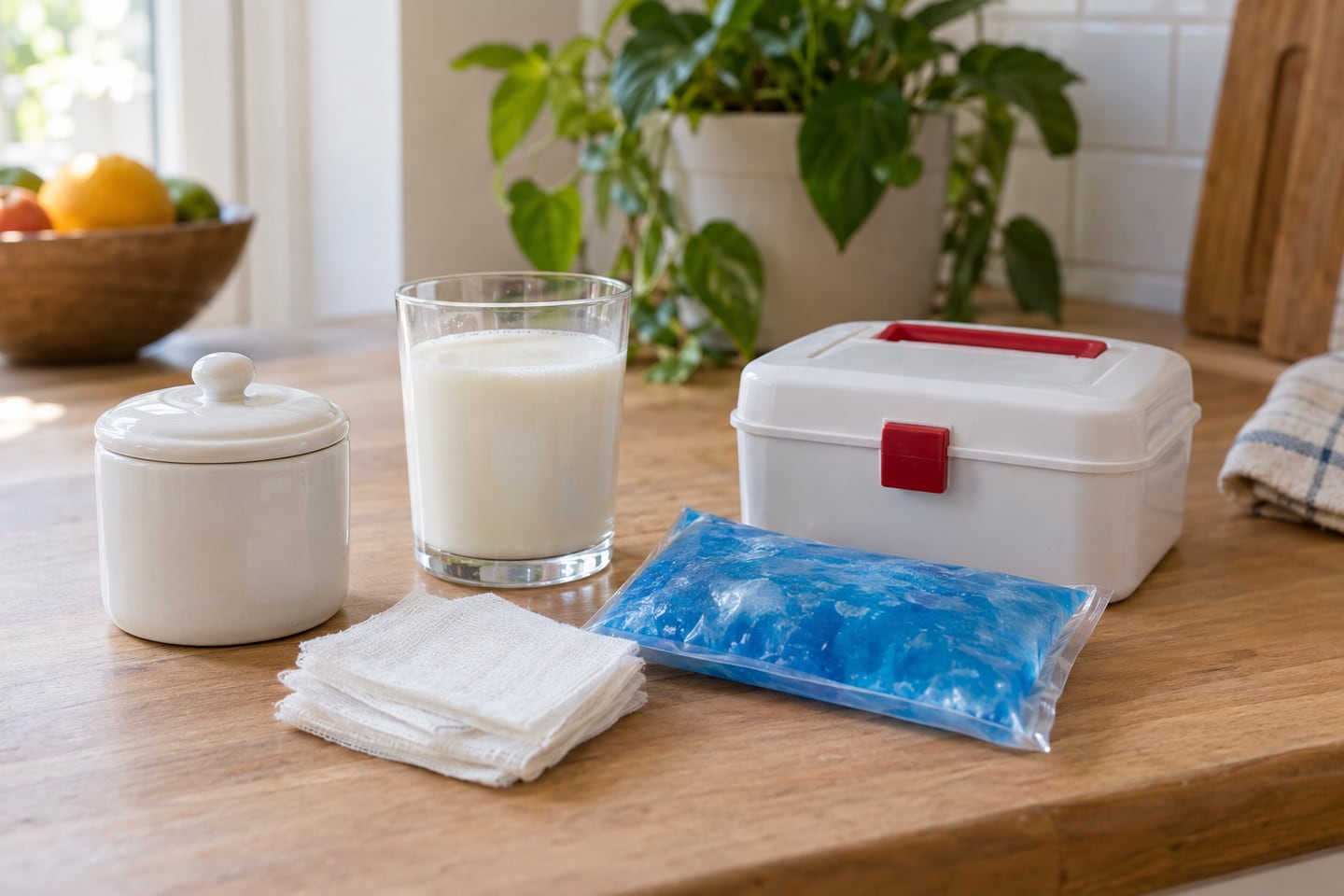
First move, almost always: call the office. Describing what happened lets the team tell you how urgently you need to be seen and what to do in the meantime — and gets a chair ready before you arrive. While you're getting there, the right first aid genuinely matters, especially for a knocked-out tooth, where minutes count. Here's what to do for the most common emergencies.
A knocked-out adult tooth
This is the true race against the clock. Pick the tooth up by the crown (the part you normally see) and don't touch or scrub the root. If it's dirty, rinse it briefly and gently with water. If you can, place it back into its socket right away and hold it there by gently biting on clean gauze or cloth. If you can't, keep it moist: a cup of milk is the classic choice, or tucked inside your cheek if you're able. Then get to a dentist immediately — a promptly replanted tooth has a real chance; a dried-out one has far less.
One important exception: a child's knocked-out baby tooth should not be pushed back in, because that can damage the adult tooth forming underneath. Keep the child calm, control any bleeding with gentle pressure, and call the office.
The minute-by-minute version, including what the dentist does when you arrive, is in knocked-out tooth: the first hour.
A cracked, chipped, or broken tooth
Rinse with warm water, save any pieces, stop chewing on that side, and cover a sharp edge with orthodontic wax or sugar-free gum. Pain on biting, bleeding from inside the tooth, or visible pink tissue means a same-day visit; a small chip that does not hurt can wait a day or two. The full first-day guide is cracked or chipped tooth: the first 24 hours.
A severe toothache
Start simple: rinse with warm water and floss gently around the tooth — a trapped popcorn hull or seed causes more emergencies than you'd think. An over-the-counter pain reliever, taken as directed on its label, can take the edge off. Two things not to do: never place aspirin against the gum (it burns the tissue rather than treating the tooth), and don't put heat on the outside of your face. A toothache severe enough to keep you up is a symptom of something that will not fix itself — call, even if it eases by morning.
A lost crown or filling
Keep the crown, chew on the other side, and use pharmacy temporary cement if the tooth needs covering overnight. Household glue is never an option. It is rarely painful, but the exposed tooth is soft-shelled, so call in the morning. Step by step: lost a filling or crown? what to do tonight.
Swelling, bleeding, or a suspected abscess
A pimple-like bump on the gum, a bad taste, throbbing pain, and facial swelling can signal an abscess — an infection that needs treatment, not tolerance. It may briefly feel better if it drains; it is not resolved. Call the same day. Persistent bleeding after an extraction or injury: bite firmly on gauze and give it time under steady pressure before re-checking.
Where the line between a same-day dental visit and the emergency room falls is laid out in tooth abscess and facial swelling: dentist or ER?.
When the emergency room comes first
Some situations outrank the dental office. Go to the ER, before the dentist, if you have:
- Facial swelling that is spreading toward the eye or down the neck, or comes with fever.
- Any difficulty swallowing or breathing.
- Bleeding that will not stop with steady pressure.
- A blow to the face with a possible jaw fracture, or any loss of consciousness.
The hospital handles the dangerous part; the dental work follows once you're safe.
Pain relief while you wait
Over-the-counter pain relievers taken as directed on the label are the right tool for the hours before a visit. Do not exceed the label dose because the pain is severe, and do not combine products without checking that they are not the same drug under two names. If you are bleeding, avoid aspirin, which makes bleeding harder to stop. Tell the office what you took and when — it changes what they can give you in the chair. And if pain relief is not touching it, say so on the phone; that is triage information, not complaining.
Where to call
Save your dental office's number in your phone now; mid-emergency is the wrong time to search for it. Three of our offices list emergency dental care: Beachside in Huntington Beach, Rio Hondo in Downey, and Marina Dentistry in Marina del Rey. Pacifica Dental does not, so Pacifica patients call Beachside in the same building. Which office to call covers what to say on the phone. If it's not an emergency yet (the cracked filling you've been ignoring, the ache that comes and goes), request an appointment and deal with it while it's still small.