
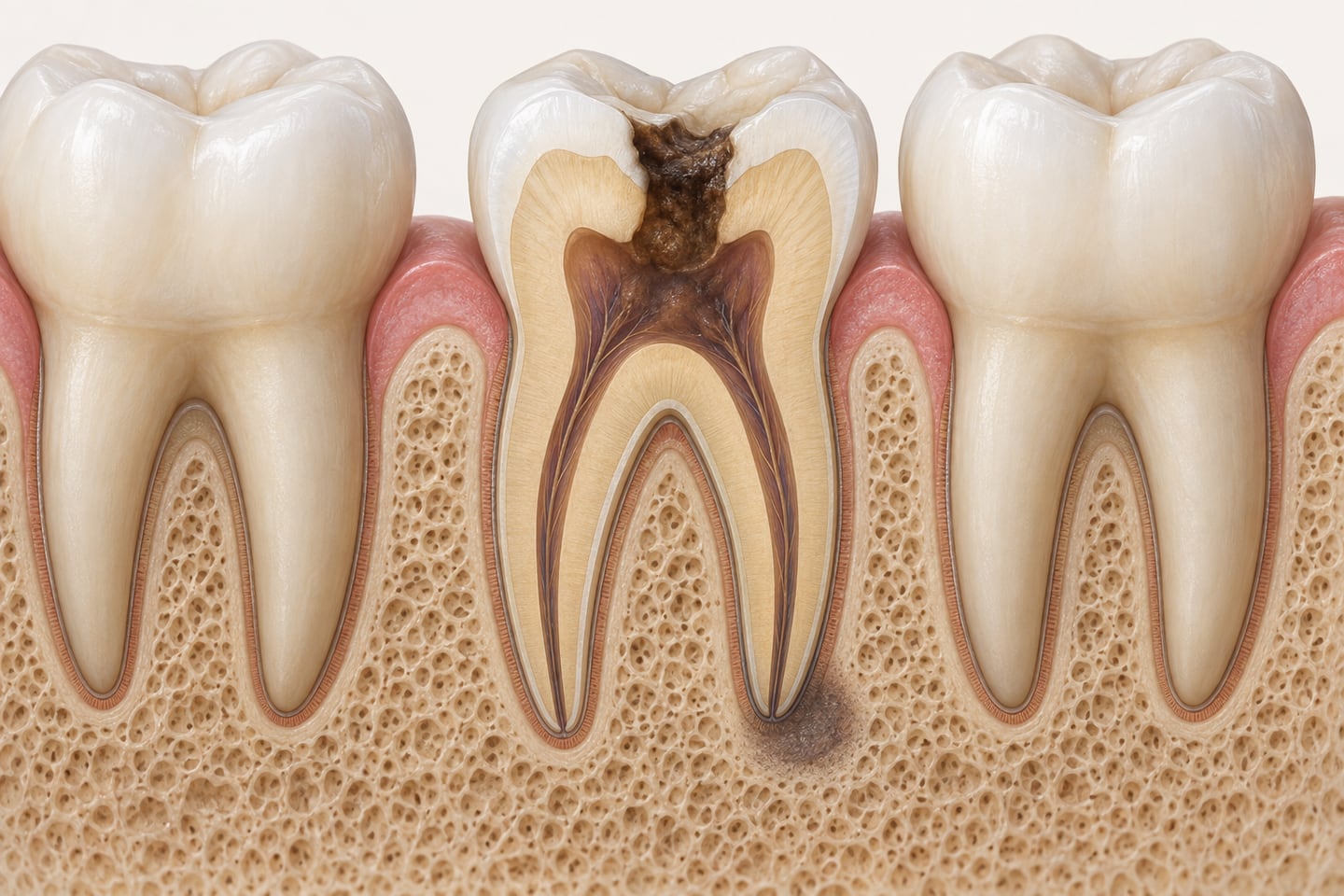
A tooth abscess, a pocket of infection at the root of a tooth or in the gum beside it, is a same-day dental appointment, not something to wait out, and it does not resolve on its own even when the pain eases. It becomes an emergency room visit when the infection is spreading: swelling that reaches the eye, swelling under the jaw or down the neck, fever with facial swelling, or any difficulty breathing, swallowing, or opening your mouth. Those signs mean the infection has outgrown what a dental office can safely handle that day. The hospital treats the spread; the dentist then treats the tooth.
What an abscess is
Bacteria reach the soft tissue inside a tooth through deep decay or a crack, or reach the bone through a deep gum pocket, and the body walls the infection off into a pocket of pus. The pressure inside that pocket is the throbbing. Sometimes it finds a way out as a pimple-like bump on the gum that drains a foul-tasting fluid; the relief that follows is real, but the infection is still there. The usual signs are pain, swelling, redness of the gum, a bad taste, and fever.
Same-day dentist: the usual case
- Throbbing pain in one tooth, often worse lying down.
- A tooth that is tender to touch or to bite on.
- A gum bump that may drain, with a bad taste.
- Swelling that stays local, in the gum or the cheek right beside the tooth.
- Low or no fever.
With those signs, call an office that lists emergency care: Beachside Dental Group, Marina Dentistry, or Rio Hondo Dental Group. Pacifica Dental does not list emergency care. Say "abscess" and describe the swelling; the front desk will tell you when to come.
Emergency room first: the red flags
- Swelling spreading upward toward the eye, or an eye that is starting to close.
- Swelling under the jaw, in the floor of the mouth, or moving down the neck.
- Trouble swallowing, drooling because swallowing hurts, or a muffled or changed voice.
- Any difficulty breathing. Call 911.
- Being unable to open your mouth more than a finger's width.
- High fever, chills, or feeling very unwell, confused, or faint.
An untreated abscess can spread into the soft tissues of the face and neck, into the jawbone, or into the bloodstream. The emergency room can image the spread, start intravenous antibiotics, drain the infection, and protect the airway. It generally will not fix the tooth, which is why the dental visit follows as soon as you are stable.
What not to do while you wait
- Do not put heat on the outside of your face; it can draw the infection outward.
- Do not hold aspirin or any tablet against the gum. It burns the tissue and treats nothing.
- Do not squeeze or pop a gum bump.
- Do not take leftover antibiotics from a previous prescription.
- Do not treat pain that suddenly stops as good news; see below.
What helps: warm salt-water rinses, a cold compress on the outside of the cheek, over-the-counter pain relief taken as the label directs, sleeping with your head raised, soft food, and plenty of water.
What the dentist does
An exam and an X-ray to find the source, then drainage: through the tooth, through a small incision in the gum, or through the pocket. Draining is what brings relief. The tooth is then either saved with root canal therapy or removed if it cannot be restored, and a gum-pocket abscess is treated as gum disease. Antibiotics are prescribed when the infection is spreading or you have a fever; they are a supplement to treating the tooth, not a replacement for it. If the dentist starts a root canal that day and finishes it later, the crown that protects the tooth afterward is the last step, and skipping it is how saved teeth are lost.
A child with a swollen face
Children's abscesses usually start in a decayed baby tooth, and a child's face swells faster and more dramatically than an adult's. The same red flags apply, with one addition: a child who will not drink, is unusually drowsy, or has a high fever with facial swelling goes to the emergency room. For everything short of that, call the dentist the same day. Treatment is often simpler than for an adult, because a badly infected baby tooth can be removed rather than saved.
After the visit: what to watch
Relief should start within a day of drainage and build from there. Swelling that keeps growing after treatment, fever that returns, or pain that climbs again after easing means the infection is not contained and the office needs to hear from you the same day. Finish the antibiotic course if one was prescribed, keep the follow-up visit even if you feel fine, and put the crown on a root-canaled tooth when the dentist says, not when it hurts again.
Why the pain stopping is not good news
Severe tooth pain that vanishes overnight usually means the nerve inside the tooth has died. The infection that killed it is still in the bone and can still spread, now without the warning signal. Book the exam anyway, and mention that the pain stopped, because that detail changes what the dentist looks for.
Antibiotics alone
An urgent care clinic or an after-hours line may start antibiotics and tell you to see a dentist. Take them as prescribed and make the dental appointment for the next day or two, not next month. Antibiotics calm the infection; they do not remove the decayed tooth or the pocket it lives in, and the abscess returns when the course ends if the source is still there.
If you are reading this with a swollen face
Read the red-flag list once more. If any line applies, go to the emergency room now. If none applies, call the nearest office that lists emergency care and say the word abscess; the office pages carry each phone number. If it is after hours and no office answers, an urgent care clinic can start antibiotics tonight and the dental visit happens first thing tomorrow. Use the online request form for the follow-up, never for the swelling itself.