
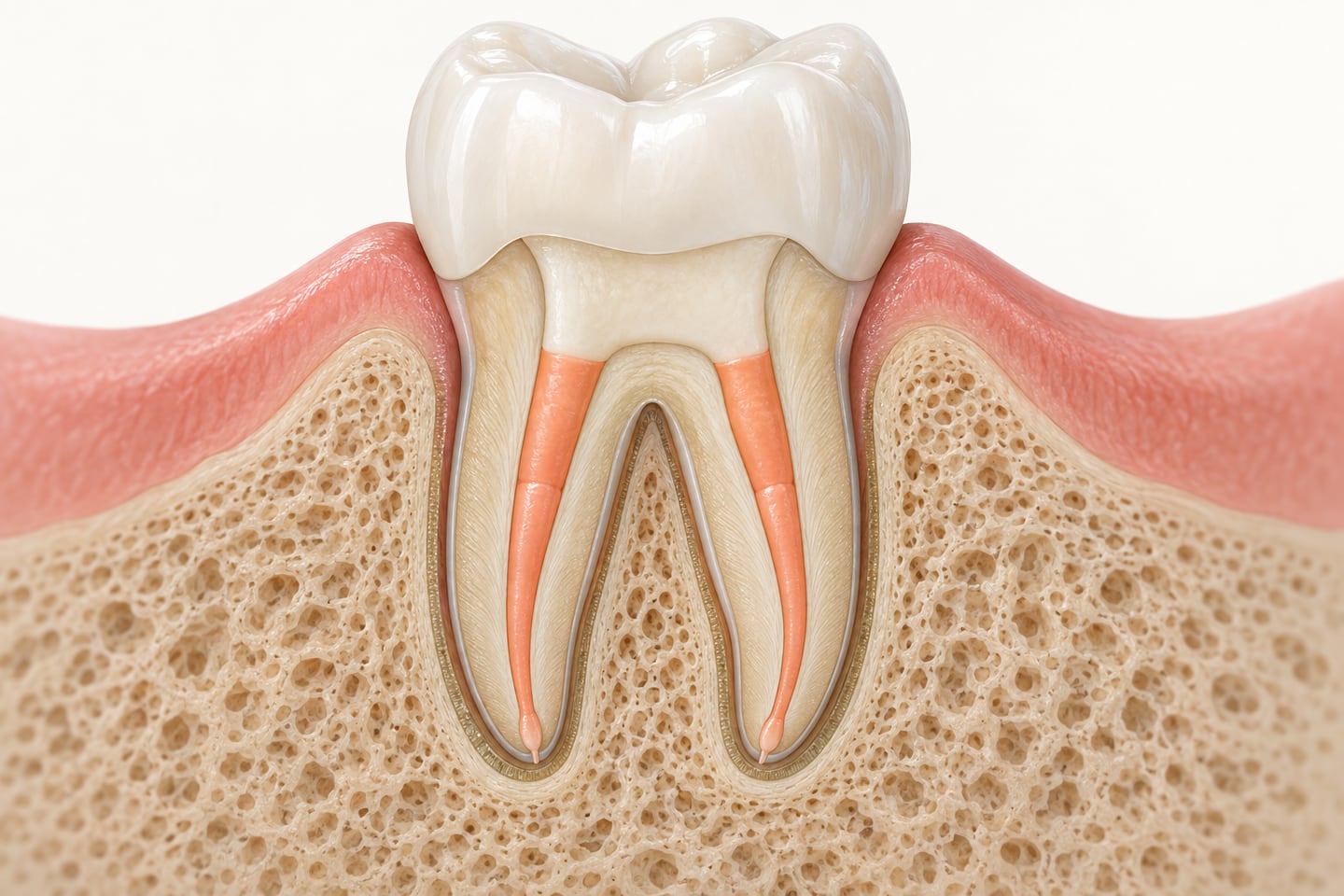
A back tooth that has had a root canal is more brittle than it was, and a crown is what protects it from fracturing under chewing force. Waiting months between the root canal and the crown risks a crack that can make the tooth unsavable. The two procedures are one treatment in two acts. Plan and budget for both from the start.
Why a treated tooth is weaker
Root canal therapy removes the infected nerve tissue from inside the tooth, cleans the canals, and seals them. That ends the infection and the pain. It also leaves the tooth without its inner blood supply, and teeth in that state become more brittle over time.
The tooth has usually lost structure before the root canal even starts. Deep decay, a crack, or a large old filling is what let infection reach the nerve in the first place. The access opening made through the top of the tooth removes a little more. What is left is a hollowed tooth with thinner walls. Molars and premolars then take the heaviest chewing forces in the mouth.
What the crown does
A crown wraps the whole tooth above the gum. It holds the remaining walls together and spreads biting force across the tooth instead of concentrating it on the weakest spot. A filling repairs a contained cavity in a tooth that still has strong walls. It patches; it does not brace. Packing a large filling into a thin-walled tooth is how fractures happen.
Which teeth need one
For most back teeth, the answer is yes. Front teeth are different. They have a single canal, take less force, and when structure loss is minimal they can sometimes be restored with a filling alone. Ask which camp your tooth is in. The X-ray and the amount of sound tooth left decide it, not a rule of thumb.
The timeline
- The root canal itself commonly takes one or two visits. Front teeth go quicker; molars have three or more canals. An active infection sometimes calls for medication placed inside the tooth between visits.
- A temporary filling seals the access opening. This is the window in which the tooth is at its most fragile.
- The crown takes additional visits: one to shape the tooth and take impressions or scans, with a temporary crown placed, and one to fit and cement the final crown.
Between steps, chew on the other side. Soreness for a few days after the root canal is normal and is your body resolving inflammation. Pain that worsens after the first couple of days, new swelling, or a temporary filling that comes out are reasons to call, and all three are easier to fix early.
What waiting months risks
- Fracture. An unrestored tooth can split under a normal bite. A crack that runs below the gum or into the root usually cannot be saved.
- Leakage. Temporary fillings are not built to last. Over months they wear and can let bacteria back into the sealed canals, which means retreatment or worse.
- Losing the investment. Skipping the crown on a back tooth is the most common way patients undo a root canal they already paid for.
If the tooth does crack first, the conversation changes from protecting a tooth to replacing one. Our guide to root canal vs. pulling the tooth explains when extraction becomes the right recommendation, and what replacing the tooth involves afterward.
If it has already been months
Do not assume it is too late, and do not keep waiting to find out. Call and book the crown visit. The dentist checks the temporary filling for wear, takes an X-ray to look for leakage around the seal, and tests the tooth for cracks. Often the crown can proceed as planned. Sometimes the seal needs attention first. Occasionally a crack has already reached the root, and the recommendation changes. The sooner the tooth is looked at, the more likely the first outcome.
Budget for both from the start
Ask for a written plan that lists the root canal and the crown together, with the cost of each, before the root canal begins. That avoids the situation where a patient finishes step one, hears the price of step two, and delays. Financing options differ by office and are subject to credit approval. Each office's membership plan is a separate program with its own terms.
Does the crown visit hurt?
A tooth that has had a root canal no longer has a nerve, so the crown preparation is usually the easier of the two visits. The gum around it is still numbed. Expect pressure and vibration rather than pain, and some tenderness afterward. Does getting a crown hurt? walks through the crown visit step by step.
Where to get it done
Rio Hondo Dental Group (Downey), Beachside Dental Group (Huntington Beach) and Marina Dentistry (Marina del Rey) each list root canal therapy and crowns on their own treatment menus. Pacifica Dental's published menu does not include them. If the tooth hurts now, request an urgent appointment and tell the front desk what you are feeling. If the root canal is done and the crown is the step you have been putting off, book the visit and finish the treatment you started. Outcomes vary with the tooth, but the crown placed on time is the part you control.