
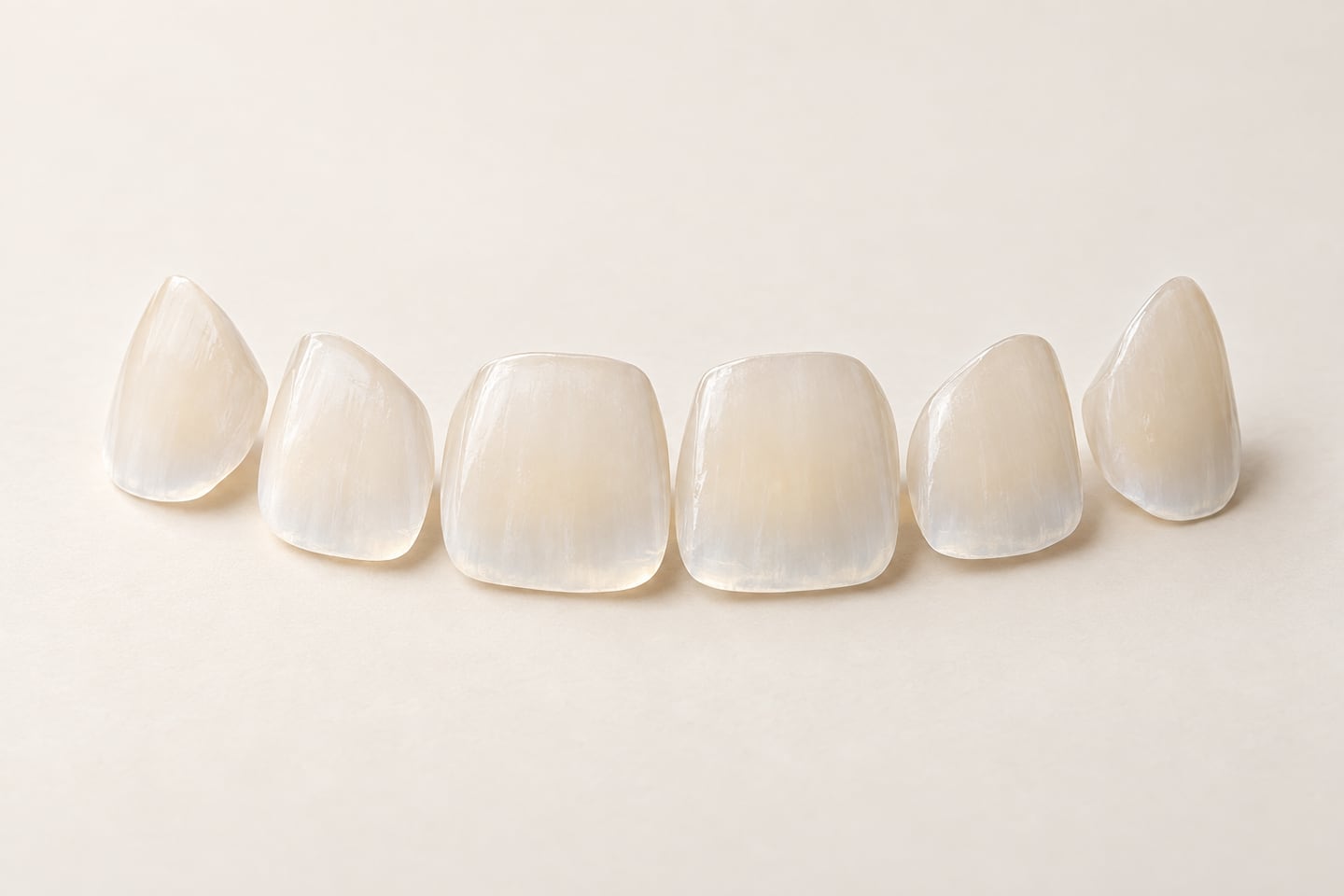
Composite veneers are finished in one visit and can be repaired in the chair; porcelain veneers last longer and resist stain better. The trade is cost and enamel preparation: porcelain costs more per tooth and usually requires removing a thin layer of enamel that does not grow back. Neither is the right answer for every tooth. The choice depends on how big a change you want, how long you want it to last, and how much of the tooth you are willing to commit.
What each one actually is
A composite veneer is tooth-colored resin shaped directly on the front of the tooth, hardened with a light, and polished the same day. Dentists often call this cosmetic bonding. There is no lab and no second appointment for the tooth itself.
A porcelain veneer is a thin shell made in a dental lab to an agreed shade and shape, then bonded to the tooth. It takes at least two visits: one to prepare the tooth and take impressions or scans, and one to try in and bond the finished piece. Temporaries cover the teeth in between.
Where composite wins
- One visit. You walk in with a chipped edge and out with a repaired one.
- Little or no enamel removal. Many composite cases need no preparation, which makes them often reversible. Porcelain almost always asks for enamel.
- Repairable. A chip in composite is usually patched in place. A chip in porcelain often means a new veneer.
- Lower cost per tooth. No lab fabrication. The number still comes from an exam, not a web page.
Composite suits small, low-stress repairs: a worn corner, a single chipped edge, a narrow gap, a stain on one tooth. It is also a reasonable way to try a new shape before committing to porcelain.
Where porcelain wins
- Stain resistance. Porcelain holds its shade better than natural enamel and far better than composite. Coffee and red wine are a much smaller threat.
- Wear. Composite dulls, picks up stain at the edges, and chips sooner. It gets patched or redone over time. Porcelain is the longer-lived material.
- Appearance on bigger changes. Porcelain handles light the way enamel does. Larger or highly visible changes, and cases that treat several front teeth at once, usually read more naturally in porcelain.
Porcelain veneers last many years with sound bonding, a balanced bite, and a nightguard when needed. Not forever. They can chip or debond, and every veneer is eventually replaced. Longevity varies with grinding habits, bite forces, and hygiene.
The trade: cost and enamel
Two things separate the options more than anything else. The first is cost. Porcelain is quoted per tooth, and lab fabrication is the main reason it costs more than composite. The second is enamel. A standard porcelain veneer needs a thin layer of enamel removed so the shell sits flush. Enamel does not grow back. A prepared tooth will need a veneer or a crown for the rest of its life. Composite usually asks for little or none of that.
That is why the full plan, including how many teeth and what shape and shade, should be shown to you before any tooth is prepared. The irreversible step never comes first.
A fair way to choose
- A small repair you are comfortable maintaining over the years: composite.
- A larger or longer-lived change, and you accept the preparation: porcelain.
- Teeth that are noticeably crooked or crowded: Invisalign first. Moving the tooth may remove the need to cover it at all.
- A tooth with large fillings or a fracture: a crown protects it better than either veneer. Our guide to veneers vs. crowns draws that line.
- Teeth that are simply not white enough and otherwise fine: start with whitening.
What the visits look like
Composite: one appointment. The tooth is cleaned and lightly roughened, the resin is shaped and hardened in layers, and the surface is polished. Numbing is often unnecessary when no enamel is removed. You eat normally the same day.
Porcelain: a consultation with photos and a written plan naming how many teeth, what shape, and what shade. Then a preparation visit under local anesthetic, with impressions or scans and temporaries placed. Then lab turnaround. Then a try-in, where you see the veneers before they are cemented, followed by bonding and a bite check. Expect a few days of cold sensitivity after preparation and again briefly after bonding.
The same rules apply to both
Whiten first if you want a lighter baseline. Composite and porcelain are both color-matched to your teeth at placement and neither whitens afterward. Gum disease and decay get treated before any cosmetic work, because both materials perform poorly on unhealthy teeth. If you clench or grind, a nightguard is part of the plan, not an extra. Results vary from person to person, and a dentist who has seen your teeth can tell you which material fits your case.
If you are still weighing whether veneers make sense at all, are veneers worth it? covers the candidacy question before the material question.
Where to have the conversation
All four of our offices list veneers on their own treatment menus. Pacifica Dental in Huntington Beach also lists Lumineers, a branded thin-preparation veneer, which is worth asking about there. Westside patients can start at our Marina Dentistry office page. Everyone else can request a consultation at any office and bring a photo of the tooth you want to change. The exam decides the material. The plan is yours to approve before anything is prepared.