
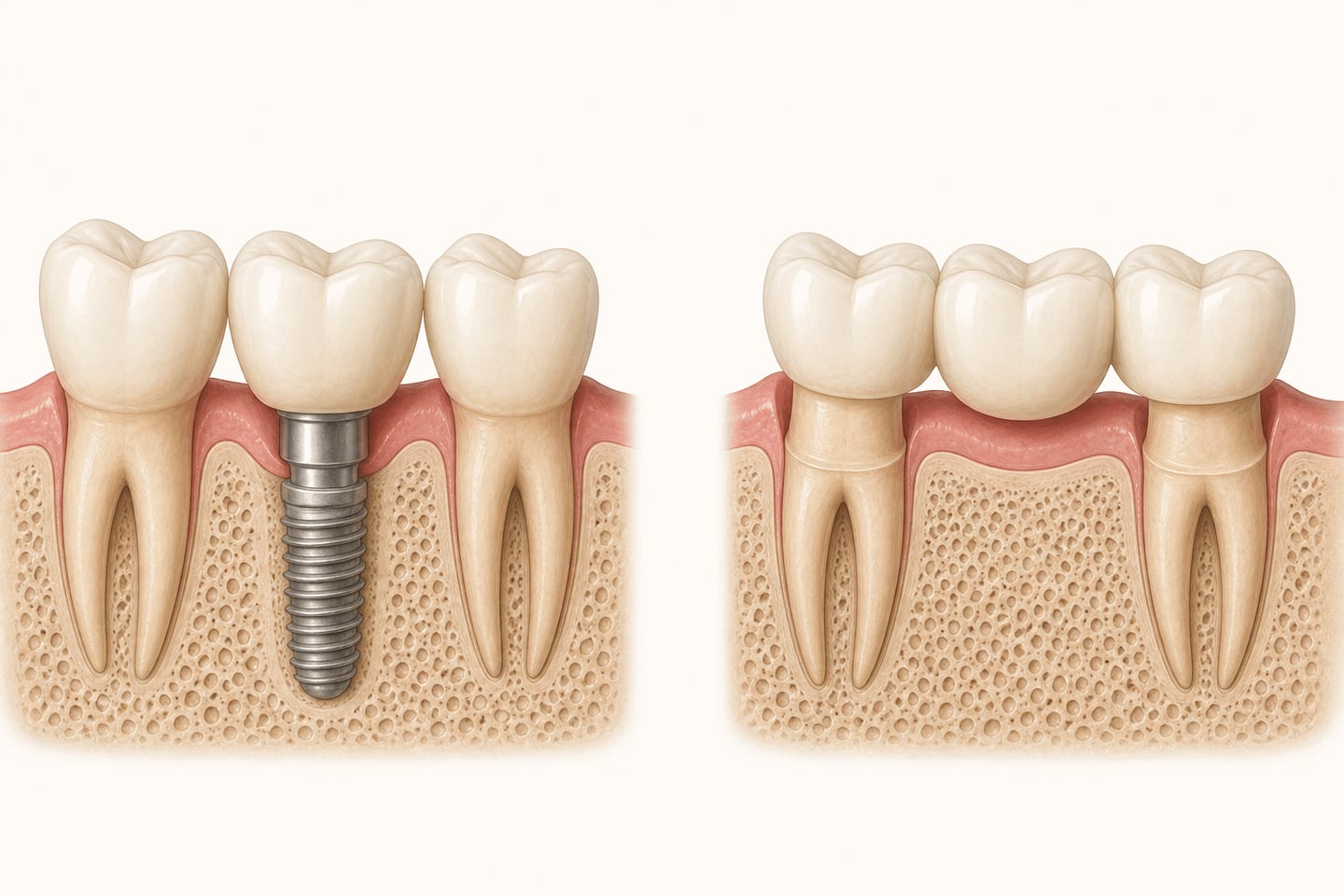
An implant replaces a missing tooth with an artificial root and crown that stand on their own. A bridge replaces it by anchoring a false tooth to the teeth on either side of the gap. Neither is better across the board. The right call depends on the condition of your neighboring teeth, the bone at the gap, how quickly you want a finished tooth, and what you can spend — in roughly that order.
How each one works
The implant
A dental implant is a small titanium post placed in the jawbone where the root used to be. Over a period of months the bone fuses to it, and a crown is then attached on top. The result is a standalone tooth: nothing rests on the neighbors, and the bone at the site keeps getting the chewing stimulation that maintains it.
The bridge
A dental bridge is one connected piece: a false tooth in the middle with crowns on either end. Those end crowns are cemented onto the neighboring teeth, which must first be shaped to receive them. No surgery is involved, and the finished bridge typically arrives in weeks rather than months.
Start with your neighboring teeth
This is usually the deciding question. If the teeth on either side of the gap are healthy and untouched, a bridge asks a real price: shaping them means removing healthy enamel from two teeth to replace one. Many dentists lean toward an implant in that situation, because it leaves the neighbors alone.
If those neighboring teeth already have large fillings or need crowns anyway, the math flips. The bridge's supports were getting crowned regardless, so the bridge does double duty — and an implant's main advantage shrinks.
Then look at the bone
An implant needs enough healthy bone to anchor into. If the tooth has been gone a while, the bone at the site may have shrunk, and grafting can rebuild it — at the cost of extra procedures and healing time. A bridge doesn't need bone at the gap, which can make it the simpler route when bone is limited. The trade-off: a bridge also does nothing to stop the bone under the false tooth from continuing to shrink over the years.
Timeline, surgery, and comfort
A bridge is the faster path and involves no surgery. An implant is a longer arc (placement, months of healing while the bone fuses, then the crown), and it does involve a minor surgical procedure. Most patients handle implant placement with local anesthetic; if dental procedures make you anxious, sedation options are worth asking about before you rule anything out.
How long each lasts, and what goes wrong
Both can serve well for many years, and neither is maintenance-free or failure-proof. Implants can fail — infection around the post, smoking, and poorly controlled diabetes all work against them. Bridges have their own weak point: decay can start where the anchor crowns meet the natural teeth, and cleaning under the false tooth takes a threader or water flosser and actual diligence. With either choice, daily hygiene and regular checkups do more for lifespan than the choice itself. Outcomes vary from person to person, and no dentist can promise you a number of years.
What drives the cost of each
We don't quote prices in a blog post, because the answer depends on your mouth. What drives implant cost: whether grafting is needed, the parts involved, and the number of visits across the process. What drives bridge cost: how many connected units it takes and the material used. Insurance plans often treat the two very differently, so it's worth checking yours before deciding on cost alone. Financing can spread either treatment into monthly payments, subject to credit approval, and our membership plans apply per-office discounts for patients without insurance.
What each one asks of you afterward
An implant crown is brushed and flossed like a natural tooth, and the gum around it is checked at each visit for the inflammation that can loosen an implant over the years. A bridge needs one extra habit: cleaning under the false tooth every day with a floss threader or a water flosser, because food packs there and the anchor teeth decay at the crown margins if it stays. Neither routine is harder than the other, but they are different, and the one you will actually keep up with is worth weighing alongside bone and cost.
Questions to bring to your consult
- What condition are the teeth next to my gap actually in?
- Do I have enough bone for an implant without grafting?
- What does each option look like for me in five and in fifteen years?
- What happens if a bridge anchor tooth develops a problem later?
- What is the full sequence of visits for each — and the full cost of each, in writing?
A good consult ends with you understanding why one option fits your mouth better — not with pressure toward the more expensive one. Request an appointment and put these questions on the table.