
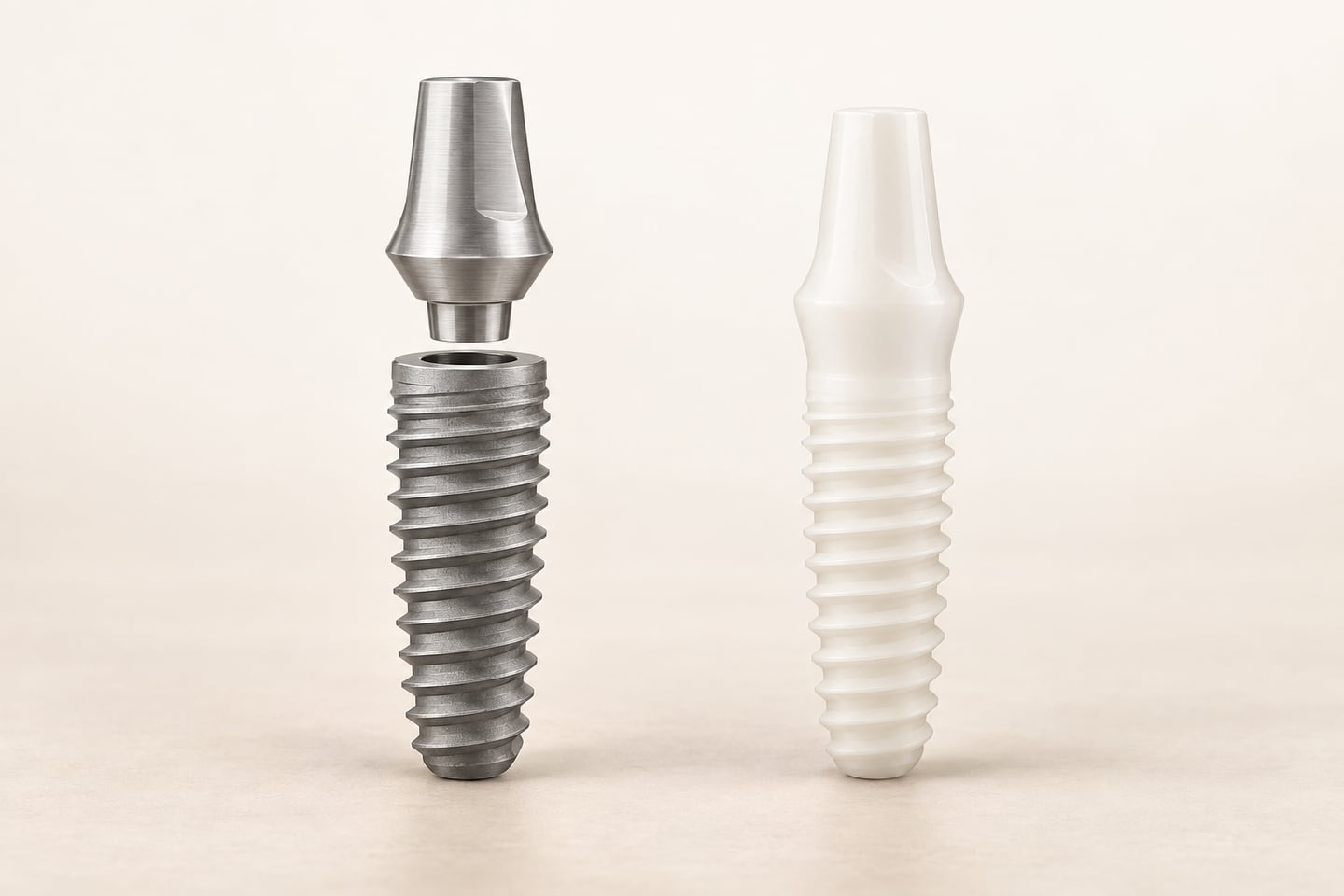
According to the FDA, most dental implant systems are made of titanium or zirconium oxide — zirconia. This comparison is about that post in the bone. The crown on top is a separate choice and can be porcelain or zirconia on either kind of implant, so a white implant is not needed to get a white tooth.
The two materials
Titanium
Medical-grade titanium or titanium alloy, used in implants for decades and by far the most studied option. It is strong, light and resists corrosion, and its surface is designed for bone to grow tightly against it. Most titanium implants come in two pieces: the fixture that sits in bone, plus a separate abutment linking it to the crown.
Zirconia
A high-strength ceramic, white rather than metallic. Zirconia implants are often made in one piece, with the abutment built into the post, although two-piece versions exist. They are newer to implant dentistry and have less long-term research behind them.
Side by side
- Track record. Titanium has the longest clinical history of any implant material. Zirconia's is shorter, which does not make it poor — it means less long-term data to judge it by.
- Appearance. Zirconia's white color is its clearest advantage. Under very thin gum at the front of the mouth, it can avoid the faint gray shadow a metal post can sometimes cast. With enough gum thickness and good positioning, titanium looks natural too.
- Adjusting the angle. A two-piece titanium implant lets the abutment correct the angle and shape of the tooth above the gum. A one-piece zirconia implant can't be adjusted that way after surgery, so it has to go in exactly right.
- Strength under load. Both are strong, but ceramic behaves differently from metal under heavy force. For heavy biters and grinders, titanium is the more forgiving choice.
- Several teeth and full arches. Bridges and full arches depend on precise angles across several implants. Titanium systems offer far more options here.
- Metal-free. Zirconia contains no metal, which matters to some people for reasons of preference or sensitivity.
When titanium is the usual choice
For back teeth, where chewing forces are highest; for replacing several teeth; for dentures held by implants; and for full arches (All-on-4, All-on-X and similar). It is also the usual choice when bone is limited or grafting is involved, because titanium systems give the most options for managing a difficult site.
When zirconia is worth discussing
For a single missing tooth in a visible spot, with healthy bone and gum, a favorable bite, and a strong preference for ceramic. In those conditions, zirconia can give a very good result. The exam has to confirm the space, the gum thickness, the bite, and the bone available for placing a one-piece implant precisely.
Metal sensitivity
Allergy to titanium appears to be uncommon, but if you have ever reacted to metal jewelry or another metal, say so at the consultation so it can be looked into properly. A preference for a metal-free implant is legitimate. It should still be weighed against what the case needs: stability comes before material.
Placement matters more than material
Most of what decides how an implant does over the years is not the material. It is the diagnosis, the bone, the position of the implant, the health of the gum, the bite, and daily cleaning. A 3D scan is what makes the position right; how you clean around the implant is what keeps it healthy; and smoking, uncontrolled diabetes and untreated gum disease matter whichever material is used.
What the crown on top is made of
Because the implant sits below the gum, the crown is what you and everyone else sees, and it is chosen separately. Most implant crowns today are ceramic: porcelain layered over a zirconia or metal core, or solid zirconia. Solid zirconia is the strongest and the usual pick for back teeth; layered porcelain gives the translucency a front tooth needs. The crown can be screwed to the abutment, which lets it be removed for maintenance, or cemented, which can look cleaner at the gumline. Those choices shape how the tooth looks and how it is serviced over the years far more than the color of the post underneath — which is the point of this comparison. A titanium implant under a well-made ceramic crown is invisible; a zirconia implant under a poor crown is not.
Ask which systems the office places
Not every office places both materials, and the answer shapes the conversation, so settle it up front. Then ask why a particular material is recommended for your case, whether the implant is one piece or two and what that means if the angle needs adjusting, and what the crown on top will be made of. Request an implant consultation and put "zirconia" in the notes if a metal-free implant is important to you — it lets the office prepare an answer instead of improvising one.