
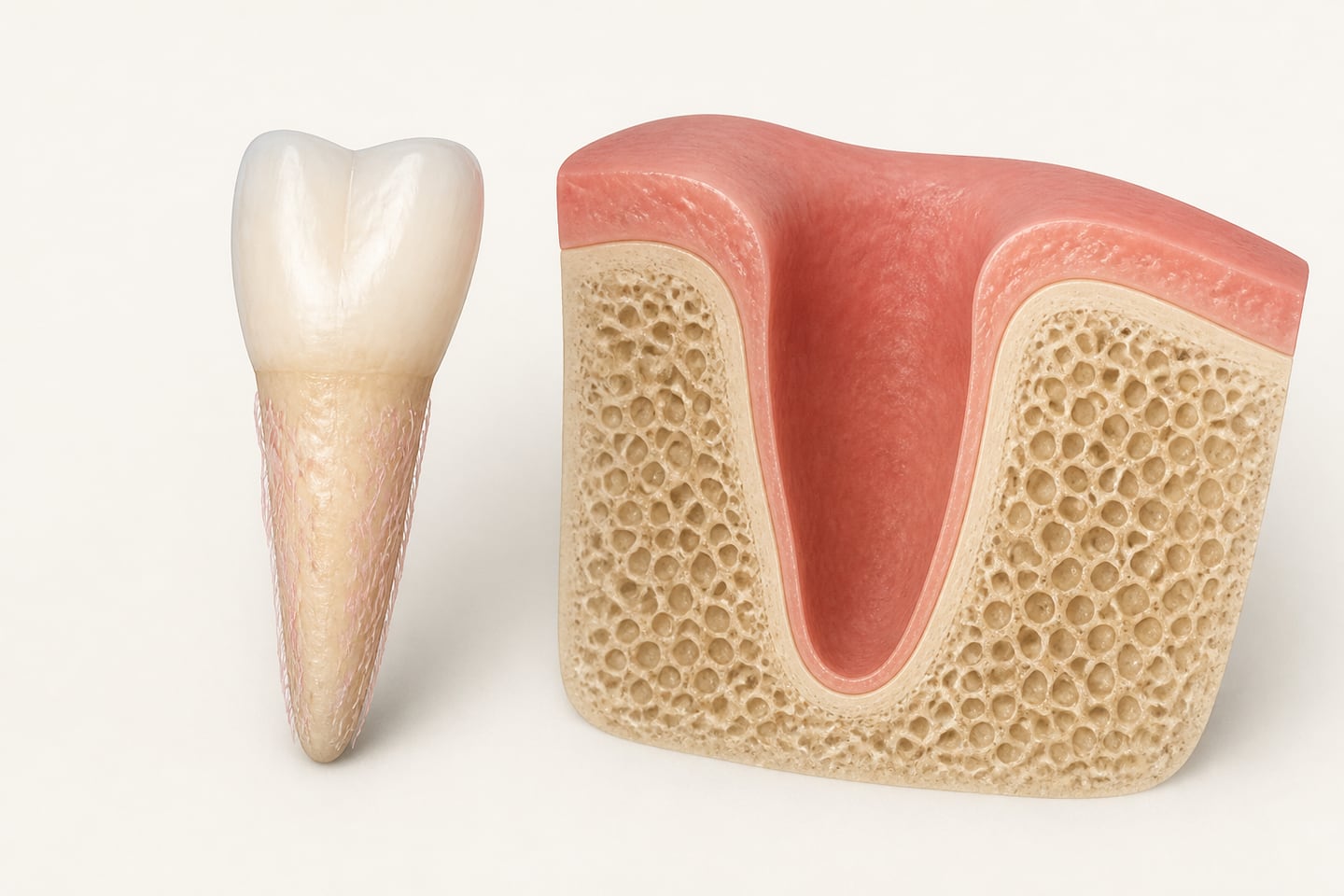
If an adult tooth is knocked out, pick it up by the crown, the white part you normally see, and never by the root. Rinse it briefly in water only if it is dirty, put it back into its socket if you can and hold it there, and get to a dentist immediately. The best outcomes come when the tooth is back in the socket within about 30 minutes, and its chances fall the longer the root is dry. If you cannot replant it, keep it wet in milk or tucked inside your cheek. A baby tooth is the one exception: do not put it back. Everything else on this page is detail in service of those sentences.
Minute zero to five: find the tooth, protect the root
- Find the tooth. Touch only the crown.
- If it is dirty, rinse it for a few seconds in cool water or milk. Do not scrub, do not use soap, do not wipe it, and do not wrap it in tissue. The root is covered in living cells that the tooth needs to reattach, and all of those things kill them.
- Do not let it dry out, even for a minute. Dry is the enemy.
Put it back if you can
Hold the crown, line the tooth up the way it sat, and push it gently into the socket. Then bite softly on a folded piece of gauze, a clean cloth, or a handkerchief to hold it in place. If it will not go in with gentle pressure, stop; forcing it damages the socket. The socket is the best storage container there is, and a tooth replanted in the first minutes has the best chance of any.
If you cannot replant it: keep it wet
- Milk is the standard choice and most households have it.
- Inside the cheek, between the gum and the cheek, works for an adult who can be trusted not to swallow it. Not for a child.
- A cup of your own saliva is the next option.
- Tooth-preservation kits, sold at pharmacies and kept by some schools and sports teams, are made for this.
- Not plain water for more than a quick rinse, not dry in a tissue, and not on ice.
Call while you travel
Call the nearest office that lists emergency care: Beachside Dental Group in Huntington Beach, or Marina Dentistry in Marina del Rey, or Rio Hondo Dental Group in Downey. Pacifica Dental does not list emergency care; Pacifica patients should call Beachside in the same building. Say the words "knocked-out tooth" first, then where you are. After hours, call anyway; if no dental office can see you quickly, a hospital emergency department can examine you, though not every ER can replant a tooth, so ask on the phone.
Go to the emergency room before any dentist if the blow that knocked the tooth out also caused a head injury, loss of consciousness, a possible jaw fracture, or bleeding that steady pressure does not control. The hospital handles the dangerous part and the tooth comes next.
What the dentist does when you arrive
An exam and an X-ray to check the socket and the neighboring teeth, then the tooth is cleaned, replanted if it has not been already, and splinted to the teeth beside it with a thin wire or bonded material so it can reattach while held still. Expect a question about when you last had a tetanus shot if the tooth was dirty. Most replanted adult teeth need root canal treatment within a couple of weeks, because the nerve inside rarely survives the injury even when the tooth itself does. The splint comes off after a period the dentist sets, and the tooth is checked for months afterward.
Outcomes vary. A replanted tooth can serve for many years; some are gradually absorbed by the body over time and eventually need replacing. Either way, replanting buys the best possible version of the next decade, and the early follow-up visits are where problems are caught while they are still small.
Pushed in, pushed sideways, or loosened: the same urgency
A blow that leaves the tooth in the mouth but moved, pushed up into the gum, angled, or simply loose, is handled with the same urgency as a tooth that came out. Do not wiggle it or push it back yourself. Bite gently on gauze to hold it still, keep it cool with a compress on the outside of the face, and call. The dentist repositions the tooth under local anesthetic and splints it while the ligament heals, and the same follow-up schedule applies. A tooth that was pushed in rather than out is the injury most often mistaken for a chip, because the tooth looks shorter; it is not a chip, and it should not wait.
Children and baby teeth
A knocked-out baby tooth is not replanted, because pushing it back can damage the adult tooth forming underneath. Control the bleeding with gentle pressure, keep the child calm, and call the dentist, who will want to check the neighboring teeth and the gum. A child's permanent tooth is handled exactly like an adult's, with the same urgency, and the adult on the scene does the handling and the storing.
If it has already been more than an hour
Still go. Replanting may still be attempted, and the dentist needs to examine the socket and the teeth beside it regardless. If the tooth cannot be saved, the conversation turns to keeping the space and replacing the tooth once the site has healed, most often with a dental implant, which for a teenager waits until jaw growth is complete.
Put the number in your phone now
Open the office page for the office nearest you and save its number before you need it, and save this page with it. If anyone in your household plays contact sports, rides, boards, or boxes, a custom mouthguard is the cheapest way to never need the steps above; ask about one at the next checkup. The broader first-aid guide to handling a dental emergency covers the other situations.