
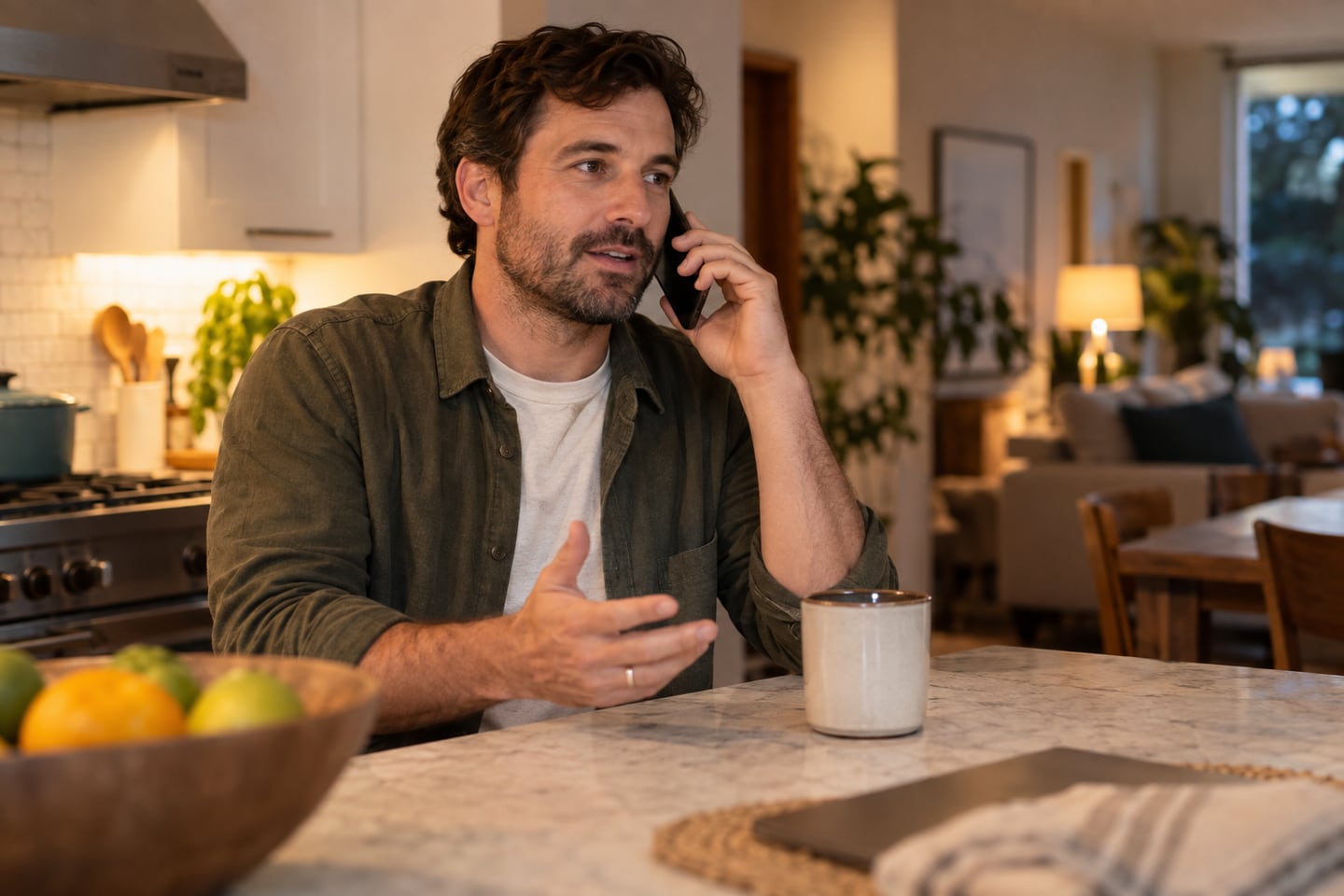
If you have a dental emergency, call the office nearest you: Beachside Dental Group (Huntington Beach), Marina Dentistry (Marina del Rey) or Rio Hondo Dental Group (Downey). Those three list emergency care. Pacifica Dental does not, so Pacifica patients should call Beachside, which is in the same building. Call first. The front desk will tell you when to come and what to do in the meantime. Do not wait on a web form for anything that hurts, bleeds, or swells.
First, the line that goes to the hospital
Swelling that affects breathing or swallowing, bleeding that pressure will not control, high fever with facial swelling, or an injury to the head or jaw belongs in an emergency room. Call 911 or go. Emergency rooms manage the danger but generally cannot repair a tooth, so the dental visit follows once you are safe. Everything else starts with a call to a dental office.
The three offices that list emergency care
- Beachside Dental Group — 18800 Main St, Huntington Beach. (714) 842-6151. Serves Huntington Beach, Fountain Valley, Westminster, Seal Beach, Costa Mesa, and the surrounding coast.
- Marina Dentistry — 4292 Lincoln Blvd, Marina del Rey. (310) 578-5000. Serves the Westside: Venice, Playa Vista, Playa del Rey, Santa Monica, Culver City.
- Rio Hondo Dental Group — 8514 Paramount Blvd, Downey. (562) 928-5559. Serves Downey, Pico Rivera, Bellflower, Norwalk, South Gate, and Montebello. Se habla español.
Pacifica Dental is a family and cosmetic practice and does not list emergency dentistry. If you are a Pacifica patient with an urgent problem, call Beachside: same building, different suite, its own phone line. Say you are a Pacifica patient. Your records do not move automatically, but the front desk can request them.
Call first. Here is why.
This article does not tell you what time to arrive, on purpose. How soon you can be seen depends on the day, the office, and how urgent you sound. The front desk works urgent cases into the schedule and gives a straight answer on the phone. Calling early in the day helps. Being willing to go to whichever of the three offices can see you soonest helps more. If it is late, call anyway. The office can often advise you by phone and tell you whether the problem can wait until morning.
What to say on the phone
The front desk triages by what you describe. Have these ready:
- What is happening: pain, swelling, bleeding, a broken tooth, a knocked-out tooth, a lost crown or filling.
- When it started, and whether it is getting worse.
- Where the pain is and what sets it off: cold, heat, biting, lying down.
- Whether there is swelling in the face or gum, and whether you have a fever.
- Existing patient or new. New patients are not turned away for being new.
- Medical conditions, medications, allergies, and whether you have dental insurance.
If a tooth has been knocked out, say those words first. The first hour matters most. Handle it by the crown, not the root, and keep it moist: in the socket if you can, in milk if you cannot. Do not reseat a child's baby tooth. More first-aid detail is on the emergency dentist page.
While you wait
Rinse with warm water. Hold a cold compress against the outside of the face for swelling. Take over-the-counter pain relief as directed on the label. Save any fragments in milk or water. Cover a sharp edge with dental wax or sugar-free gum. Do not put aspirin on the gum, and do not apply heat to swelling. Step-by-step guidance for specific situations is in how to handle a dental emergency and a cracked or chipped tooth in the first 24 hours.
What the first visit does
An emergency visit has one job: find the cause and make you stable. Expect an exam and usually an X-ray, then whatever stops the problem from getting worse. That might be a prescription for infection, a root canal that is started now and finished later, a temporary filling, a smoothed edge, or a recemented crown. Permanent work often comes at a second visit once the tooth has settled. You should leave knowing what was done, what comes next, and what it costs before the next step begins. If fear kept you from calling, say so. Sedation options are listed at every office; the front desk will confirm what can be arranged for an urgent visit.
A toothache that stopped is not a toothache that is gone
Severe pain that vanishes overnight can mean the nerve inside the tooth has died; the infection that caused it is still there and can still spread. Book the exam anyway.
Cost and paying for it
The visit is an exam, usually with X-rays, plus whatever stabilizes you. The cost depends on the diagnosis, so there is no figure to give here. Treatment beyond the exam is explained and priced before it begins. Financing, subject to credit approval, and membership plans differ per office. Rio Hondo is the group's office for Denti-Cal and Medi-Cal patients; see Denti-Cal questions for Rio Hondo patients.
If it is urgent, call. If it can wait, request an appointment and pick your office on the form, or start from all four locations.