
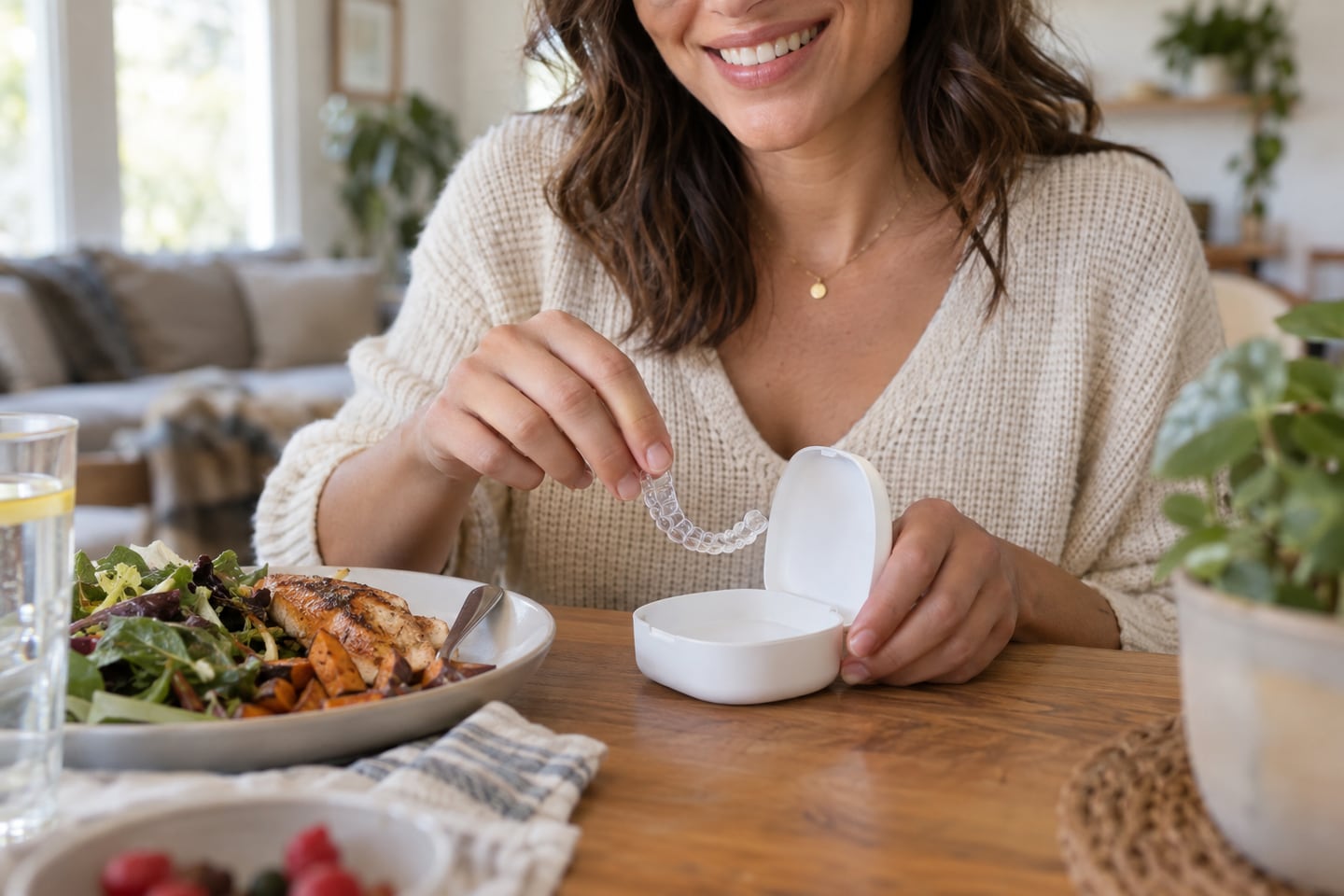
With Invisalign the rules are short: take the trays out to eat or drink anything other than plain water, brush or at least rinse before they go back in, and clean the trays themselves every day. Coffee, tea, wine, juice, and anything hot or sugary are tray-out drinks. What trips people up is not the rules but doing them for every snack and every coffee for the better part of a year, so this is as much about habits as about rules.
Why the trays come out for everything but water
Three reasons. Heat warps the plastic, and a warped tray stops moving teeth. Anything with sugar or acid gets held against the enamel by the tray, with no saliva to wash it away, which is how people finish treatment with straight teeth and new cavities. And chewing cracks trays. Invisalign only works while the trays are in, so a cracked or warped tray is lost tooth-moving time.
Eating
- Take the trays out and put them in their case. A napkin is how most trays get thrown away with the lunch tray.
- Eat whatever you like. Unlike braces, there is no list of forbidden foods.
- Brush before the trays go back in. If you cannot brush, rinse thoroughly with water and brush at the first chance.
- Keep meals as meals. Grazing through the afternoon costs more wear time than three proper meals.
Drinking
Water with the trays in. Everything else with them out, including iced coffee, sparkling water with flavor, and diet soda, which is still acidic. The habit that quietly wrecks more treatment plans than any other is the coffee sipped across the whole morning: every sip means trays out, or trays in and stained, and either way the hours add up. If the all-morning coffee is non-negotiable, drink it in one sitting and brush. Alcohol follows the same rule and dries the mouth as well.
The wear-time math
Most plans call for the trays to be in for roughly 20 to 22 hours a day, and your dentist confirms the number for yours. Three meals and two coffees can use up the allowance by themselves. Anything beyond it comes directly out of the time the trays spend moving teeth, and the first sign is a tray that no longer seats fully after a few days. Under-wearing is also the main reason plans need refinements, the extra sets ordered when teeth have not tracked to plan.
Gum, mints, and the small stuff
Gum pulls trays out of shape and sticks to attachments; it is out for the duration. Mints and lozenges are sugar held against the teeth under plastic, which is the worst combination, so reach for water or, with trays out, a sugar-free option and a rinse. Lip balm is fine. Anything chewed or dissolved in the mouth counts as eating, whatever it looks like.
The first week
New trays feel tight for the first day or two, and the first set of all can make speech sound slightly different until the tongue adjusts, usually within days. Switch to a new tray at night so the tightest hours pass while you sleep. A sore spot on the gum from an edge is normal once and worth a call if it persists; the office smooths the edge in a minute. Taking trays out to eat becomes automatic faster than most people expect, and the case goes in the pocket with the keys.
Cleaning the trays
- Rinse them every time they come out, and again before they go in.
- Once a day, brush them gently with a soft brush and clear, unscented liquid soap or the cleaning product the office recommends. Toothpaste is abrasive and clouds the plastic.
- Never hot water. Warm at most.
- Soak cloudy trays in the recommended cleaner. A tray that smells has been skipping this step.
- Wash the case. It is the dirtiest object in the routine and the trays live in it.
Cleaning your teeth
Brush twice a day and after meals while in treatment, floss every day, and pay attention to the gumline and around any attachments, which collect plaque. The trays cover your teeth for most of the day, so whatever is on them when the tray goes in stays there. Keep your cleaning and exam visits on schedule during treatment rather than pausing them; tell the hygienist you are in aligners so the attachments are cleaned around properly.
Stains, attachments, and whitening
Attachments are tooth-colored composite and pick up stain from coffee, tea, and tobacco between cleanings; they are polished at visits and removed at the end. If you want a whiter result, ask the office about timing. Many people whiten after the attachments come off and the teeth are in their final position, when the result is even. Aligner trays are not whitening trays unless the dentist prescribes them as such.
Travel, work, and dinners out
Carry a small kit: the case, a travel brush, floss picks, and a spare tray if you are mid-change. For trips, take the next set with you rather than risking a gap. If a tray cracks, go back to the previous one and call. If you lose a tray, call before skipping ahead; sometimes the next tray is fine to start early and sometimes it is not, and the office decides. A sore spot from a tray edge is smoothed in a minute at the office.
Set the routine before the first tray
Decide now where the case lives, where the travel brush goes, and what happens to the morning coffee. Most adults find the routine easier than expected after the first two weeks. A few find that remembering is the hard part and that braces, which have nothing to remove, suit them better, which is a reasonable conclusion to reach before the fee is paid rather than after.
Request a consultation and ask to hold a tray, see what attachments look like, and talk through a normal day. Whether this routine fits your life is the question the consultation should answer before anything else.