
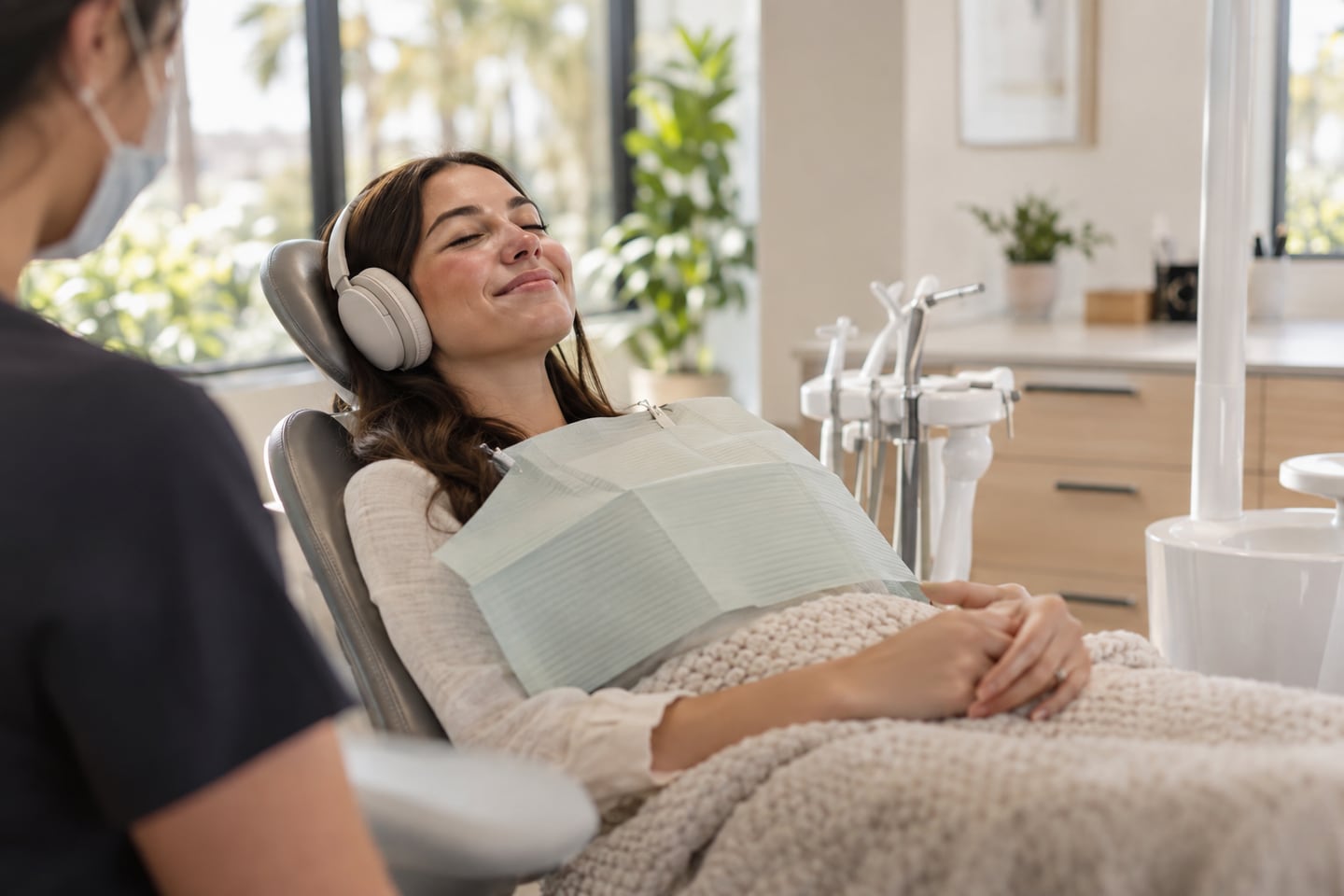
The placement is not usually the painful part. Your jaw is numbed with local anesthetic before anything begins, and what people report feeling during the surgery is pressure, vibration, and the sound of it rather than pain. The soreness in the days afterward is the real experience, and that is what this article is about. It is not painless. It is also not the ordeal most people are picturing when they type this question.
What the appointment actually involves
For a single dental implant, the sequence is short. The area is numbed. A small opening is made in the gum. A channel is prepared in the bone at a controlled speed and depth, the titanium post is threaded into it, and the gum is closed, usually with a few stitches. You are awake, you can hear everything, and you feel the pressure of the work being done.
That last part is worth sitting with, because pressure is what surprises people. Local anesthetic blocks sharp pain well. It does not block the sensation of being pushed on, and implant placement involves real force. If you go in braced for pain, the appointment is more likely to feel strange than agonizing. If pressure itself is what you dread, that is a different problem than pain, and it has a different answer, which is further down this page.
How long it takes depends on how many posts are going in and whether anything else happens at the same visit. Ask your office for the estimate for your case instead of a general number.
How it compares to having a tooth pulled
If you have had a tooth extracted, you already have your reference point. The two procedures sit in the same family. Both are done with local anesthetic. Both trade sharp pain for pressure while they happen. Both are followed by several days of a swollen, tender jaw that you manage at home.
The difference runs in an unexpected direction. An extraction removes something and leaves an open socket to heal. A placement puts something into a prepared site and closes it. Difficult extractions of broken or deeply rooted teeth can be the harder of the two. That comparison is the scale to plan around, not the worst story you have heard from a relative.
One complication: those two things are sometimes done at the same visit, and then you are recovering from both. Whether an implant can go in right after the extraction is its own question with its own answer.
What the days afterward feel like
The anesthetic wears off within a few hours, and that is when the ache starts. Expect tenderness at the site, swelling that tends to peak around the second or third day before easing, sometimes bruising, and a jaw that feels stiff when you open wide. A site far back in the mouth can make swallowing feel odd for a day or two.
What actually helps, in the order it matters:
- Ice, early. Cold on the outside of the face during the first day does more for swelling than anything you take.
- Pain relievers as directed. Take what your office tells you to take, on the schedule they give you, and read the label. Staying ahead of the soreness works better than chasing it.
- Soft and cool food. The ADA's patient guidance on implants describes exactly this: soft foods, cold foods, and warm soup while the site heals.
- No straws and no smoking. Suction and tobacco both interfere with a healing surgical site. Smoking also slows implant healing over the longer term, which the FDA names directly in its patient guidance.
- Rest for the first day. Bending, lifting, and workouts raise blood pressure at the site and can restart bleeding.
Most people are past the worst of it inside the first week and back to normal food long before the bone has finished doing its part. Implant recovery, week by week lays out the longer timeline.
What makes it hurt more than average
Not every implant case is the same size of event. These are the things that reliably add to the soreness:
- Bone grafting or a sinus lift at the same visit. These build up a site that cannot hold a post as it is, and they add surgery, swelling, and healing months.
- Several implants, or a full arch, in one appointment. More sites means more of everything, including recovery.
- An infected or badly broken tooth coming out at the same visit. You are healing from two procedures at once.
- Smoking. It delays healing at an extraction site and raises the odds of dry socket, which the ADA describes as a painful condition that happens when the clot over the socket is displaced.
- Grinding or clenching. A jaw that works all night is a jaw that stays sore longer.
If a graft is in your plan, read bone grafting before dental implants before the appointment. Knowing which version of this you are having changes what you should expect to feel.
Pain that is not normal
Soreness that improves a little each day is the expected pattern. Call the office without waiting if you get any of the following instead:
- Pain that gets worse after the third day rather than better.
- Swelling that keeps growing after the third day, or spreads toward your eye or down your neck.
- Fever, or a bad taste and discharge from the site.
- Numbness or tingling in your lip or chin that has not faded long after the anesthetic should have worn off.
- A sense that the implant is loose or twisting, which the FDA lists among the complications worth reporting.
None of these mean the implant has failed. They mean somebody who can look at it needs to look at it, and waiting out a problem is what turns a small one into a large one.
If the fear is the real reason you have been waiting
Dental fear is common enough that it is a normal thing to say out loud, and the office would rather hear it at booking than discover it in the chair. The ADA's own advice to anxious patients is plain: tell the receptionist you are nervous when you book, agree on a hand signal so you can ask for a break, and ask questions, because knowing what is about to happen removes most of the fear of the unknown.
Local anesthetic is the standard for implant placement. If that is not enough for you, sedation is a legitimate thing to raise, and the different levels of it are covered in sedation dentistry options explained. Three of the group's offices list sedation on their own service menus: Beachside Dental Group and Pacifica Dental in Huntington Beach, and Marina Dentistry in Marina del Rey. Ask the office you plan to visit what it can arrange for your appointment.
Two limits on sedation. It changes how the appointment feels, not how the next three days feel, so it does nothing for the soreness that is the actual subject of this article. And the deeper levels take longer and require someone to drive you home, so ask what each level adds to the visit before you pick one. It is a tool for getting you through the appointment, not a shortcut past recovery.
What to ask before you book
- Is anything else happening at this visit, such as an extraction or a graft?
- What will I feel during it, and what will I feel that evening?
- What are you giving me for the soreness, and when do I start taking it?
- What counts as normal on day three, and what should make me call you?
- What are my options if I am too anxious to sit through it awake?
Fear is a reason to ask for help with the appointment. It is a poor reason to choose a worse replacement for the tooth, or to leave the gap and let the bone under it shrink. If the question has been keeping you out of the chair, request an implant consultation and put the word anxiety in the notes, so it is known before you are in the chair rather than after.