
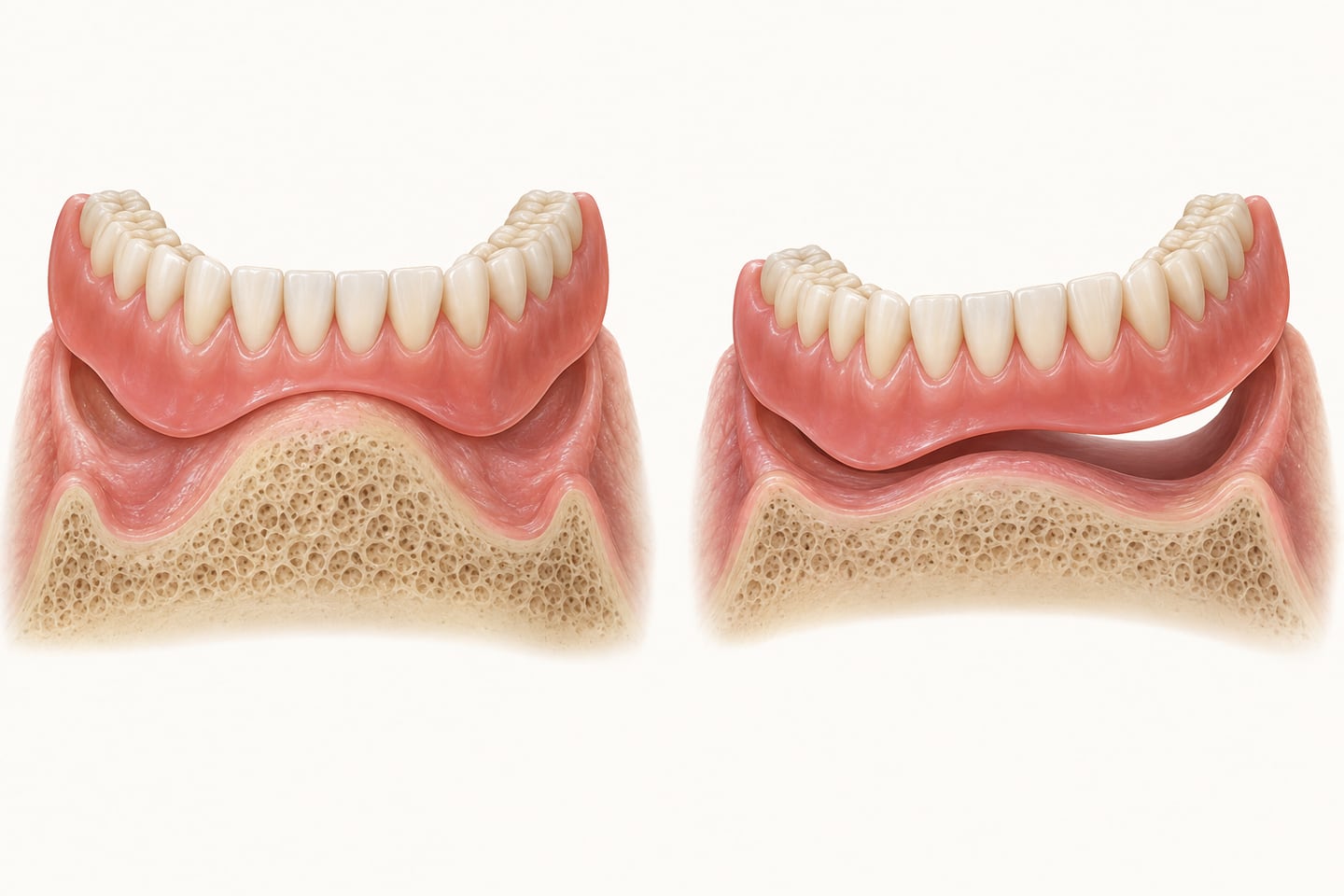
A denture is made to fit your mouth as it was on the day it was made. Your mouth keeps changing after that, and the denture doesn't. That mismatch is behind most slipping, rocking and clicking — which is why the fix is usually a change to the denture or to what holds it, not more adhesive.
A little movement is normal. This isn't.
A removable denture moves slightly; that is the nature of something resting on gum. It should not repeatedly lift when you speak, rock when you bite, drop when you laugh, or leave sore spots. Those are signs something has changed, and a loose denture that is left alone tends to cause sores, make eating harder and push people toward softer, less nutritious food.
The common causes
The ridge under it has shrunk
Once teeth are removed, the bone that held them has no roots to support and slowly resorbs, so the ridge a denture rests on becomes lower and narrower over the years. The ADA notes that dentures become ill-fitting as the gums change over time, and suggests having one evaluated if it is more than five years old. This is the most common reason a denture that used to fit no longer does.
The denture itself has worn or warped
The teeth on a denture wear down, the base can warp, and clasps on a partial can bend. Any of these changes how it sits and how evenly it bites. Cracks and chips do the same.
Dry mouth
Saliva helps a denture seal against the gums. When there is less of it, the seal weakens. According to the NIH, hundreds of medications reduce saliva — including common ones for blood pressure, depression and bladder control — so a denture that loosened around the time a prescription changed may not be a fit problem at all. Mention any new medications at your visit; dry mouth has its own causes and treatments.
Food or old adhesive underneath
A few crumbs under the base, or a layer of yesterday's adhesive left on it, is enough to break the seal and tip the denture. Cleaning the denture and your gums every day is part of how it stays put.
The bite is uneven
Upper and lower dentures should meet evenly. If one side touches first, chewing tips the denture instead of pressing it into place. This often shows up as a denture that is fine at rest and moves when you bite into something firm.
The lower denture has the hardest job
A lower denture rests on a narrow ridge with the tongue on one side and the cheeks and lips on the other, all moving constantly as you talk and eat. It has far less surface than an upper to hold onto, which is why lower dentures are the ones people most often end up holding in with their tongue.
Why more adhesive isn't the answer
Adhesive is meant to add a little security to a denture that fits, not to rescue one that doesn't. The ADA is explicit that adhesives are not a remedy for ill-fitting dentures, and notes that some contain zinc, which can build up in the body with overuse — so use no more than the directions say. Never repair a broken denture with household glue; take it in instead. How to care for dentures covers the daily routine and the adhesive mistake in more detail.
What fixes it
An adjustment
For a sore spot or an uneven bite, small changes to the base or the teeth are often enough. It is a short visit and the right first step when the denture is otherwise in good shape.
A reline
A reline resurfaces the inside of the denture so it matches the shape of your gums as they are now. It is a good answer when the denture is sound but has loosened. It resets the fit; it does not stop the ridge from continuing to change, so it will likely be needed again in time.
A new denture
When the teeth are worn flat, the base is warped or the bite has shifted, a new denture is usually more reliable than repeated repairs. The ADA's page cites a recommendation to replace a denture when irritation under it becomes chronic. See dentures for what the process involves.
Implants the denture clips onto
This is the only option that changes what holds the denture rather than how well it fits. Two or more implants are placed in the jaw and the denture snaps onto them, so it no longer depends on suction and adhesive. It is removable for cleaning and noticeably steadier — the lower denture benefits most. For people who want teeth that don't come out at all, a fixed arch on implants is the next step up; All-on-4 vs. implant-supported dentures vs. conventional dentures compares the three.
Don't wait on these
- A sore spot that doesn't heal after an adjustment.
- Bleeding gums or persistent pain under the denture.
- A denture that suddenly stops fitting.
- Gagging, or struggling to eat enough.
Bring the denture with you
How the denture sits in your mouth, where it rubs, and how it wears are most of the diagnosis, so bring it along — cracked, worn, or long since abandoned in a drawer. Dentures, and the implants that hold them, are listed by three of our offices — Rio Hondo Dental Group in Downey, Beachside Dental Group in Huntington Beach and Marina Dentistry in Marina del Rey. Pacifica Dental does not list dentures. Request an appointment and write "loose denture" in the notes so the visit is booked long enough to look properly.