
A temporary crown protects the prepared tooth and holds its position while the laboratory builds the crown you will keep. It is cemented lightly on purpose, so it can be removed in one piece at the fitting visit. That is also the reason it comes loose more easily than the final crown ever will. Chew on the other side, avoid sticky and hard food, and change how you floss around it.
What a temporary is actually doing
It looks like a placeholder, and people treat it like one. It is doing four jobs while your crown is being made:
- Covering the prepared tooth. Enamel was removed all the way around. The layer underneath reacts to cold, sweetness, and even a sharp breath of air, and it is more open to bacteria than intact enamel.
- Holding the space. Teeth drift. Left uncovered, the neighbors lean in and the opposing tooth settles down slightly, and a crown built to fit your mouth on prep day stops fitting. This is the part people underestimate most.
- Shaping the gum. Gum tissue heals against the temporary's contour. That is what lets the final crown sit cleanly at the margin instead of against a swollen, bleeding edge.
- Letting you eat and speak normally. Within limits, and the limits are the rest of this page.
It is made of acrylic or a similar provisional material, chairside or at a laboratory. It is not built to the standard of the final crown and is not meant to be. It has a job measured in days.
Why temporaries come loose
- The cement is deliberately weak, because a temporary that could not be removed cleanly would mean drilling it off and irritating the gum right before the fitting.
- A short or heavily tapered prepared tooth gives the cement less to hold.
- Sticky food grips the crown and pulls upward with more force than the cement is designed to resist.
- Grinding and clenching work it loose over several nights.
- Flossing straight up through a tight contact lifts it off, which is the most avoidable cause on this list.
None of that means anything went wrong at the appointment. A temporary coming off is common enough that offices schedule short visits for it.
What to eat, and what to leave alone
If you remember one rule, make it this one: chew on the other side. Everything below is a refinement of that.
- Skip sticky and chewy things. Caramel, toffee, taffy, chewing gum, dried fruit, and anything that pulls at the crown as your jaw opens.
- Skip hard things. Ice, nuts, hard candy, popcorn kernels, raw carrots, crusty bread ends. A provisional material chips where enamel would not.
- Go easy on very hot and very cold. The prepared tooth conducts temperature more sharply than it used to, and a temporary is thinner insulation than the final crown.
- Cut food smaller and use your back teeth on the other side. Biting into a whole apple or a sandwich with the front teeth transmits force through the arch.
- Soft is fine, and normal. Eggs, pasta, fish, cooked vegetables, yogurt, soup, rice, ground meat. This is a couple of weeks, not a diet.
How to floss around a temporary crown
Do not stop flossing there. Skipping it inflames the gum at exactly the line the final crown has to meet, and a swollen, bleeding gum makes the fitting visit harder and the result worse.
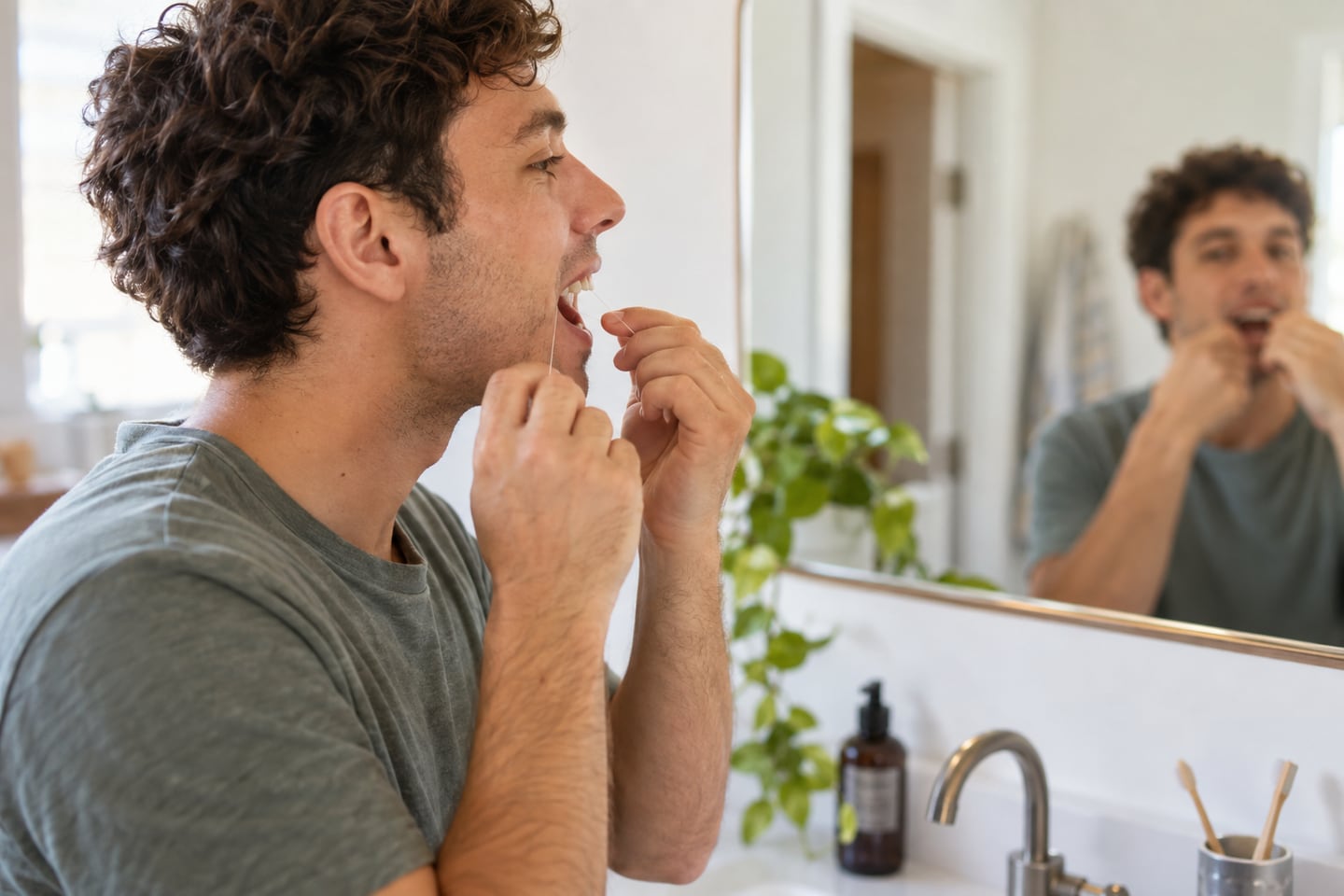
The ADA's method is the starting point: about 18 inches of floss wound around the middle fingers, held tight between thumbs and forefingers, guided between the teeth with a gentle rubbing motion, curved into a C shape against the tooth at the gumline, never snapped into the gums. Once a day.
The change is at the end. Instead of pulling the floss back up through the tight contact between the teeth, let go of one end and pull it straight out sideways, so it slides out from between the teeth rather than lifting. Pulling up is what pops a temporary off: the contact grips the floss, the floss grips the crown, and the weak cement gives way. Pull through, do not lift out.
Brush the temporary normally, gently, along the gumline. A soft brush will not dislodge it.
Sensitivity: what is normal and what is not
Cold sensitivity with a temporary is common. So is a brief zing on sweetness and some tenderness in the gum for a day or two after the prep visit, especially if the gum was retracted to take the impression. It should be easing across the days, not building.
What is worth a call: pain that lingers after the cold is gone, a throb that wakes you at night, pain on biting that gets worse rather than better, or a temporary that feels tall when your teeth meet. A tall temporary is a two-minute adjustment and worth going in for. Lingering or spontaneous pain can mean the nerve inside the tooth is inflamed, and root canal therapy may need to happen before the final crown goes on. That is a finding about the tooth, not a change of plan for its own sake. What the crown appointments feel like start to finish covers the rest of what is normal afterward.
If it comes off at night or on a weekend
This is inconvenient rather than dangerous, as long as you do not leave the tooth bare for long.
- Find it and keep it. Rinse it under water and put it in a small container. Most temporaries can be recemented, and a replacement made from scratch costs you a visit.
- Rinse your mouth with warm water and look at the tooth. A small, rough-surfaced stub is exactly what a prepared tooth looks like. Bleeding from inside the tooth is not.
- Try seating it back on. Dry the inside of the crown and the tooth with a tissue, work out which way round it goes by comparing it to the neighbors, and press it gently into place. If it does not seat easily, stop. Forcing it can crack it.
- If it seats, temporary dental cement from a pharmacy will hold it until the office opens. Follow the package directions. If it does not seat, leave it out rather than risk swallowing it in your sleep.
- Household glue is never an option, in any circumstance, for any restoration.
Then protect the tooth overnight: soft food, nothing hot or cold, chew entirely on the other side, and an over-the-counter pain reliever taken as the label directs if it is tender. The fuller first-night routine, including a sharp edge, a swallowed crown, and what the visit itself involves, is in lost a filling or crown: what to do tonight. The ADA's general advice for dental problems is the same shape: rinse with warm water, gently floss out anything trapped, and be seen as soon as you can.
Call the office when it opens even if you got it back on and it feels fine. Pharmacy cement is a bridge to an appointment, not a substitute for one.
When it is genuinely urgent
A temporary that came off a comfortable tooth is not an emergency. These are, and they belong on the emergency side of the phone call:
- Swelling in the gum or the face, or a fever.
- Pain that wakes you, or that over-the-counter pain relief taken as directed does not touch.
- The tooth itself broke or chipped along with the temporary.
- Bleeding from inside the tooth that does not stop with gentle pressure.
- You inhaled it rather than swallowed it, with coughing or trouble breathing. That is a hospital emergency room, immediately.
Swelling that spreads toward the eye or down the neck, or any difficulty swallowing or breathing, also goes to a hospital first. The dental work follows once you are safe.
What not to do
- Do not glue it. Not with household adhesive, not with anything from a hardware store.
- Do not leave it off for weeks because it does not hurt. Teeth drift within days, and a final crown that no longer fits has to be remade.
- Do not chew on it to test whether it is holding. You are testing the cement to destruction.
- Do not file or trim it yourself, however rough an edge feels. Report it and it gets smoothed in a minute.
- Do not whiten while a temporary is in. The shade for your final crown has already been recorded against your current teeth.
How long you will wear it
Usually a couple of weeks between the prep visit and the fitting, depending on the laboratory and on the case. If the wait stretches, because a crown is remade for shade or fit or because you had to postpone, call and have the temporary checked rather than riding it out. Provisional material wears, and a prepared tooth is not designed to spend months under it.
Once the final crown is on, the care changes from careful to ordinary, with one addition that matters for years: clean the margin at the gumline every day. That single habit does more for how long the crown lasts than anything else you can do. If your temporary is loose right now, request an appointment or call the office treating you and say when it came off and whether the tooth hurts. Those two facts decide how soon you need to be seen.